Belo Horizonte to Vitória by Train, in Executivo Class
Brazil's only daily intercity train service is not fast by any stretch, but it is affordable, comfortable, and a vital link for the 28 communities it serves.
Introduction
Despite having nearly 30,000 kilometres of railroads, in all of Brazil there are only two long-distance passenger train journeys possible: the Carajás Railway, linking Parauapebas with São Luís, and the Vitória-Minas Railway, connecting Belo Horizonte (BH) with Vitória. Of these, only the latter runs daily, in both directions. This line is also where you will find Brazil’s only overnight train: special night trains ran over the holidays in 2025/26, and saw high demand.
The overwhelming majority of the country’s rail infrastructure is devoted to freight, mostly serving Brazil’s mining sector. Vale, a vast multinational mining and logistics conglomerate and one of the country’s largest employers, owns and operates both of Brazil’s intercity trains under a concession from the federal government.
Here’s what it’s like to cover 905 kilometres across nearly 14 hours in the most comfortable seat Vale sells.
Tickets and Boarding
Ticket sales open 45 days before departure, with sales possible online from anywhere in the world. While you can purchase a ticket in-person up to the day of departure, this isn’t recommended: this train is popular, and does sell out especially in executivo class.
Vale offers two classes of service: econômico and executivo, or economy and executive class. An economy ticket for the full journey costs R$87, or about $17 USD. Executive class is R$125, or around $24 USD. For an extra $7 you get more space, but that’s it: the on-board service is identical, and executivo customers get no included food or drink. The benefit of more comfortable seats, and especially not having a seatmate if you’re travelling solo, is absolutely worth this small extra expense.
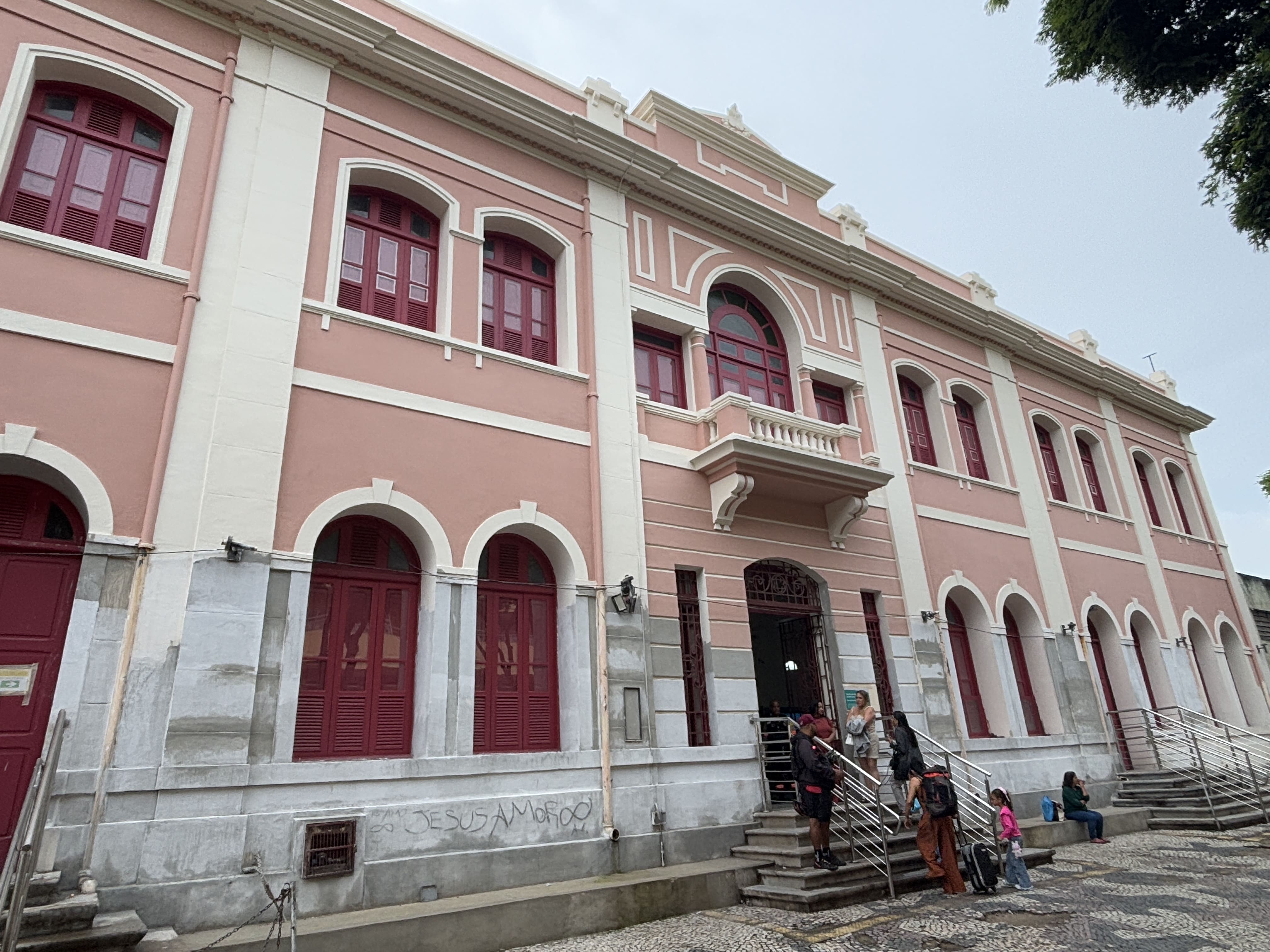
You'll find the station in Belo Horizonte, unlike in Vitória, located conveniently in the city centre. It's prettier on the outside than in, and it's not terribly pretty on the outside.
Aside from full fare tickets, Vale also offers multiple discounted fares, in line with Brazil’s extensive list of federally-protected disabilities. There is a separate car with seating for the elderly and disabled.
Note that Vitória station is not called “Vitória” when booking: look for “Pedro Nolasco”, this is the station located on the outskirts of Vitória.
Buying your ticket online up to 45 days in advance is recommended, but not as easy as it should be.
In theory, foreigners do not need the ubiquitous CPF (a sort of Brazilian social security number) to book online: when purchasing the ticket, you can check a “foreigner” box and enter your passport instead. In practice however you still need a CPF, like for most everything else in Brazil. In order to complete your online purchase, you will need an account. In order to create that account you will need…a CPF. This wasn’t a big deal, I just used a fake one as I have been doing for months travelling across Brazil without issue. I also entered a fake Brazilian address, this field being mandatory to complete your purchase. The transaction went through using my international card, so Vale’s online portal isn’t completely hopeless. Just, let’s say, user-unfriendly.
Top tip: for the most comfortable journey, book a solo seat in an executivo car close to the centre of the train.
You book both your carriage and seat when purchasing a ticket. Executivo class is arranged 2-1, and solo travellers obviously will want a solo seat. I chose lucky seat 13 in lucky carriage 13, which was in the second passenger compartment behind a staff car and the locomotive. There was, for the first hour or so, a noticeable diesel smell coming, presumably, from the locomotive, so I would recommend booking a seat in a carriage further back from the locomotive. Our train had four executivo cars: 11 was closest to the centre of the train, 14 closest to the locomotive. The only downside to booking a seat in a car closer to the train’s centre is this is also closer to the restaurant cars, so you will have a steady stream of passers-by.
The station in Belo Horizonte opens daily at 06:00 for ticket sales and waiting passengers ahead of a daily 07:00 departure. The boarding platform closes at 06:45, so make sure to arrive at least a few minutes beforehand so you’re in the queue. I showed up at 06:30, which seemed to be about when most passengers arrived. The station has washrooms but no WiFi.
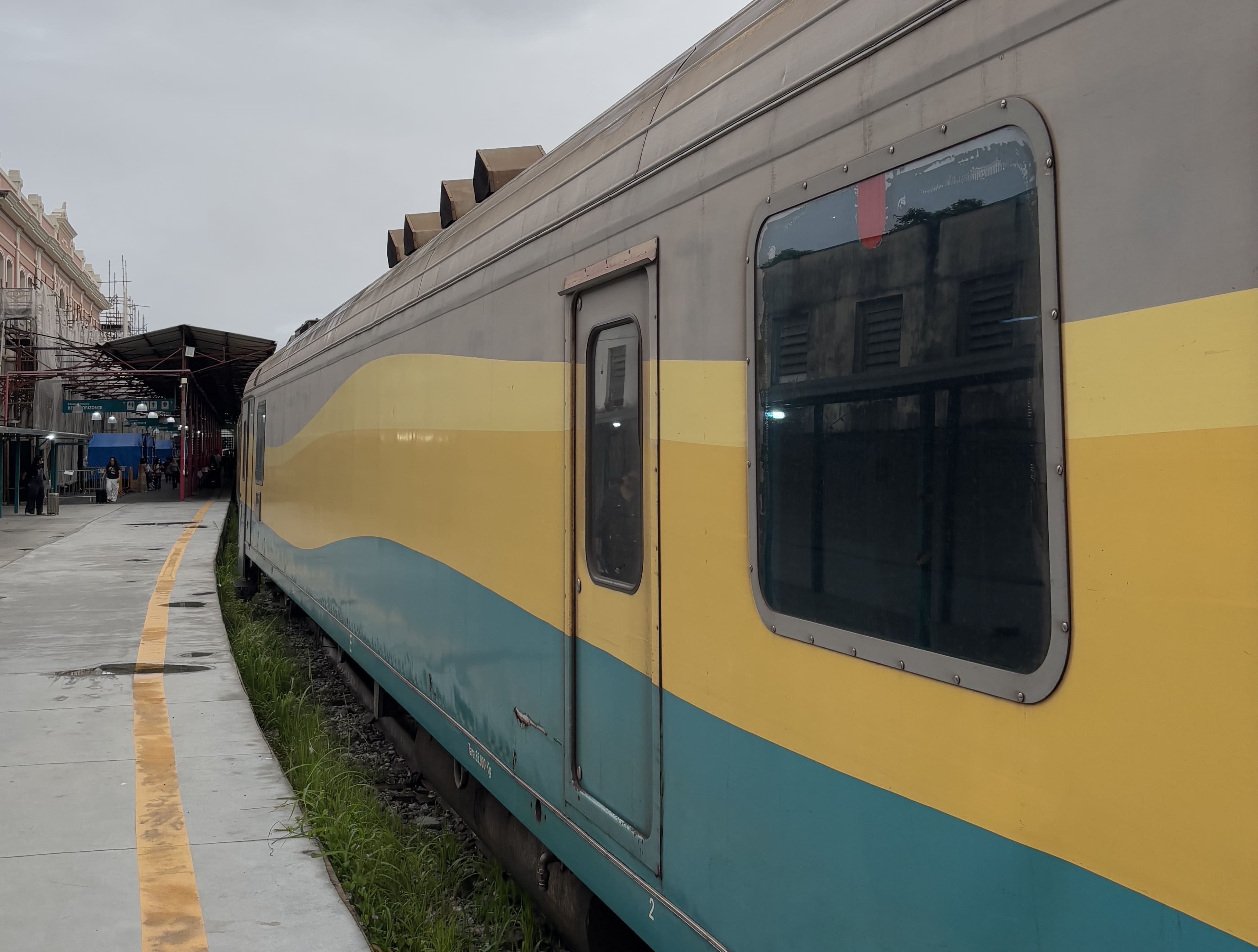
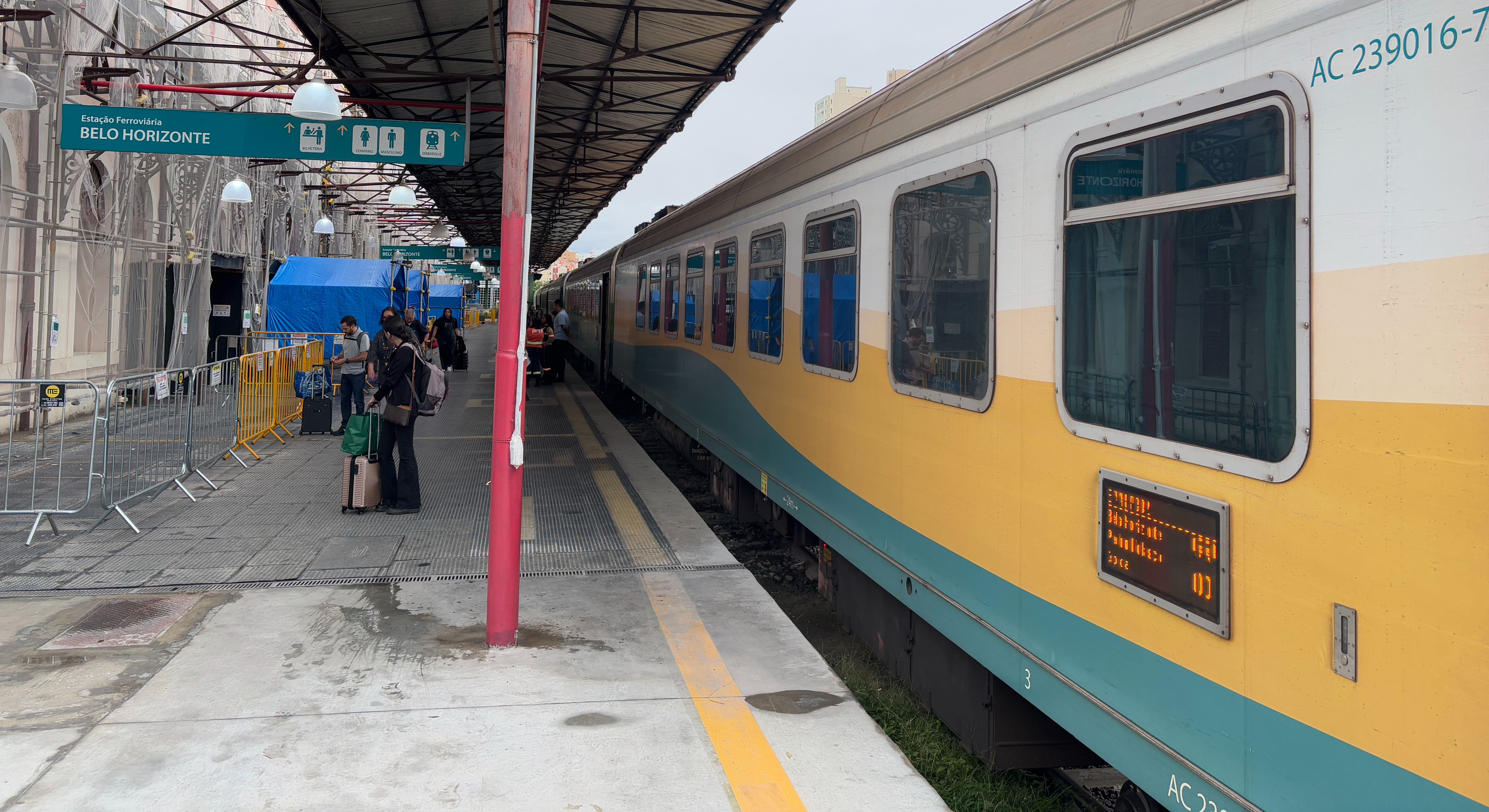
Our ride ready for its on-time departure from Belo Horizonte.
When entering the platform area, Vale employees check your ticket and identification. I printed my ticket, though others were displaying theirs on a mobile device. Make sure to keep your ticket on you, as it is checked a few times throughout the journey.
We left at 07:00 to the minute, so technically we did depart on time…but before the entire train had actually pulled away from the platform, we stopped and sat for 12 minutes before getting underway properly.
The Seat
Each executive seat has a large, metal tray table that pulls up and out from the seat in front of you, with a mesh pocket below this. There is a footrest that folds up and out of the way (which is where I left it for most of the trip). Each seat has a 220 volt outlet, headphone jack for the in-train entertainment (more on that below), and a reading light located above the window. Overhead racks are available for anything up to a carry-on, with storage areas at both ends of each carriage for larger bags.
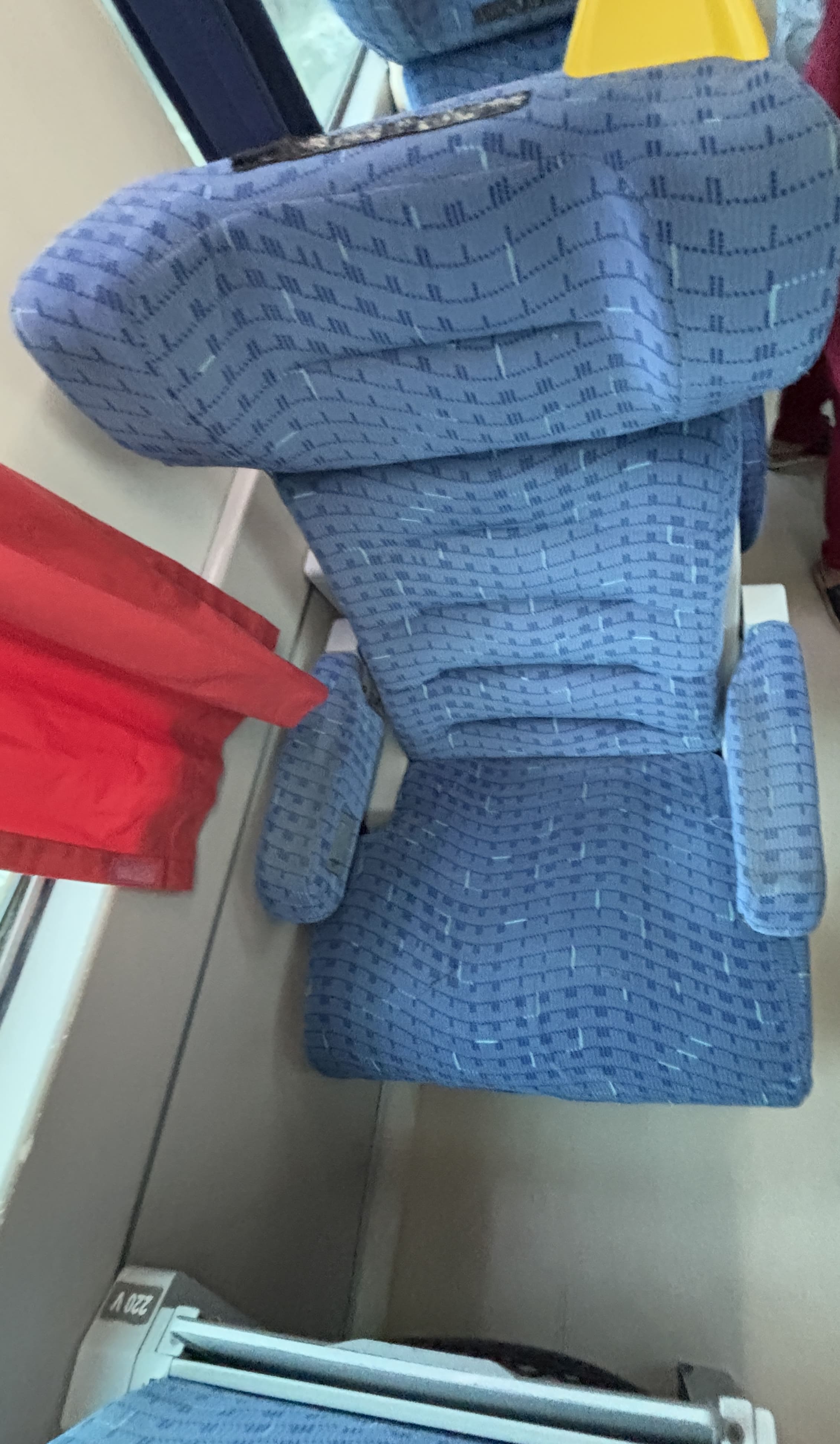
Comfortable, as it has to be for such a long journey.
These windows were quite dirty. This was unfortunate, since the scenery en route is a major draw for those making the trip by rail. The interior, while kept clean by staff throughout the journey, was well-worn with torn seats and scratched paint.
Seats are located in a solid metal frame. They recline by moving the seat bottom forwards, similar to premium economy on Lufthansa group airlines. This means that your legroom isn’t affected by the person in front reclining their seat, but your knee room is very much affected if you yourself recline. Legroom isn’t great to begin with: I’d estimate it at 32/33 inches with the seat fully upright, less than you’d find on U.S. First or even LATAM premium economy. This was surprising: usually a major benefit of rail over air travel is much more personal space, since obviously trains are less weight-sensitive than aircraft.
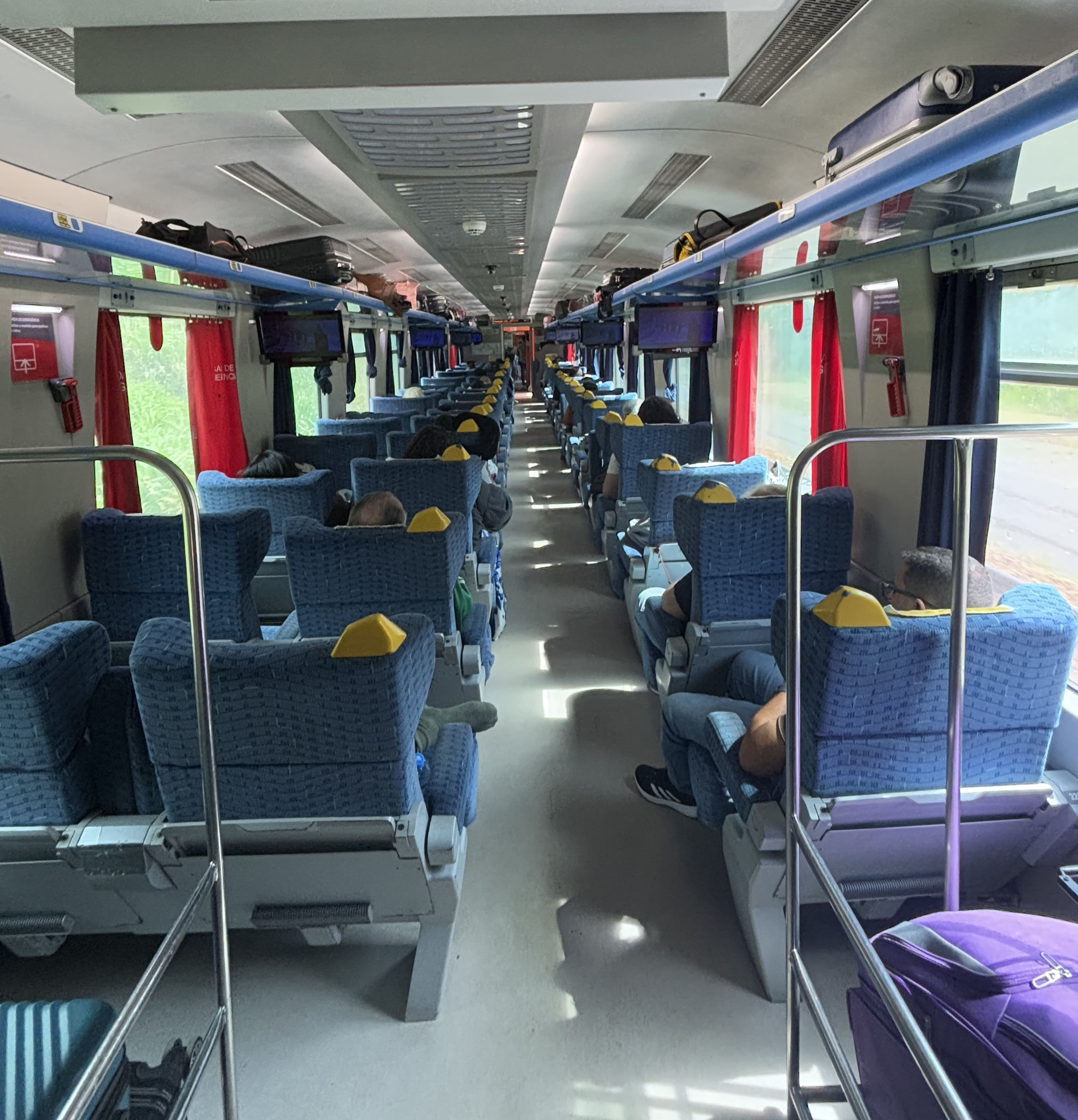
Our train had four executivo carriages identical to this one: 2-1 seating, overhead luggage racks, and storage areas for larger bags.
Still, I found the seat to be comfortable, even after 13.5 hours. Having one of the solo seats and being able to stand up, stretch, and walk regularly without climbing over a seatmate was part of the reason for this, though the seat itself was well padded.
The Journey
The train does not have WiFi and cell service is infrequent along the route, being confined mostly to areas around stations and non-existent in the rural stretches between stops. Air conditioning started quite weak, and it was warm for the first two or three hours of the journey. After this point though, once the train had cooled down, the air conditioning wasn’t adjusted accordingly—by about the ten-hour mark I was pulling on the sweater I had packed for Bolivia and Peru, and wasn’t expecting to need in the 30°C+ heat of Minas Gerais.
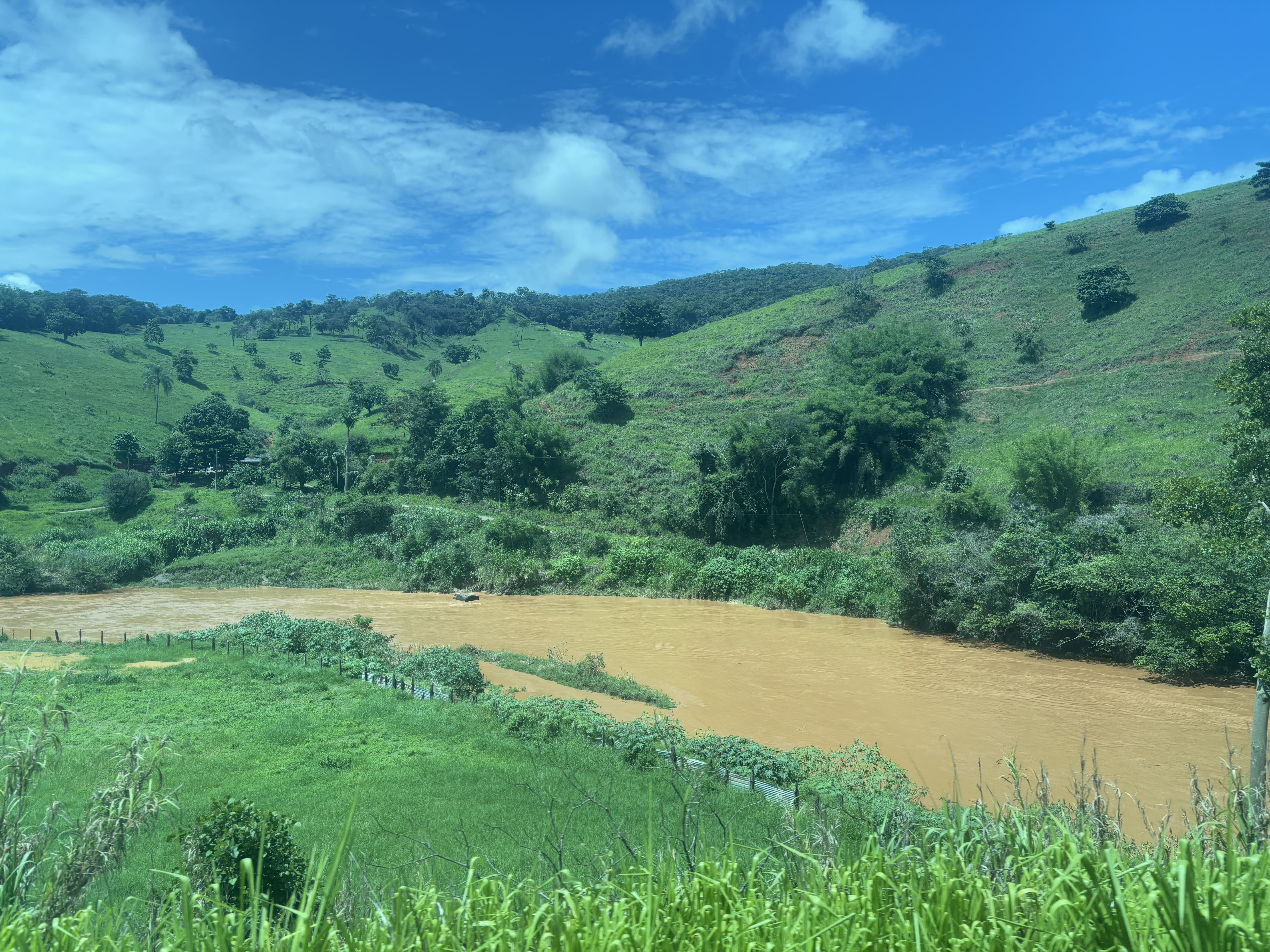
Such a sunny day in the tropics calls for a sweater.
My carriage was mostly (I’d say about 80%) full, though the economy car into which I peeked was mostly empty. The small upcharge to executivo seems to generally be seen as good value. There is security on board, and security cameras also line the roof of each car. I kept my passport and cash on me but wasn’t worried leaving my suitcase and small backpack behind when I walked around the train.
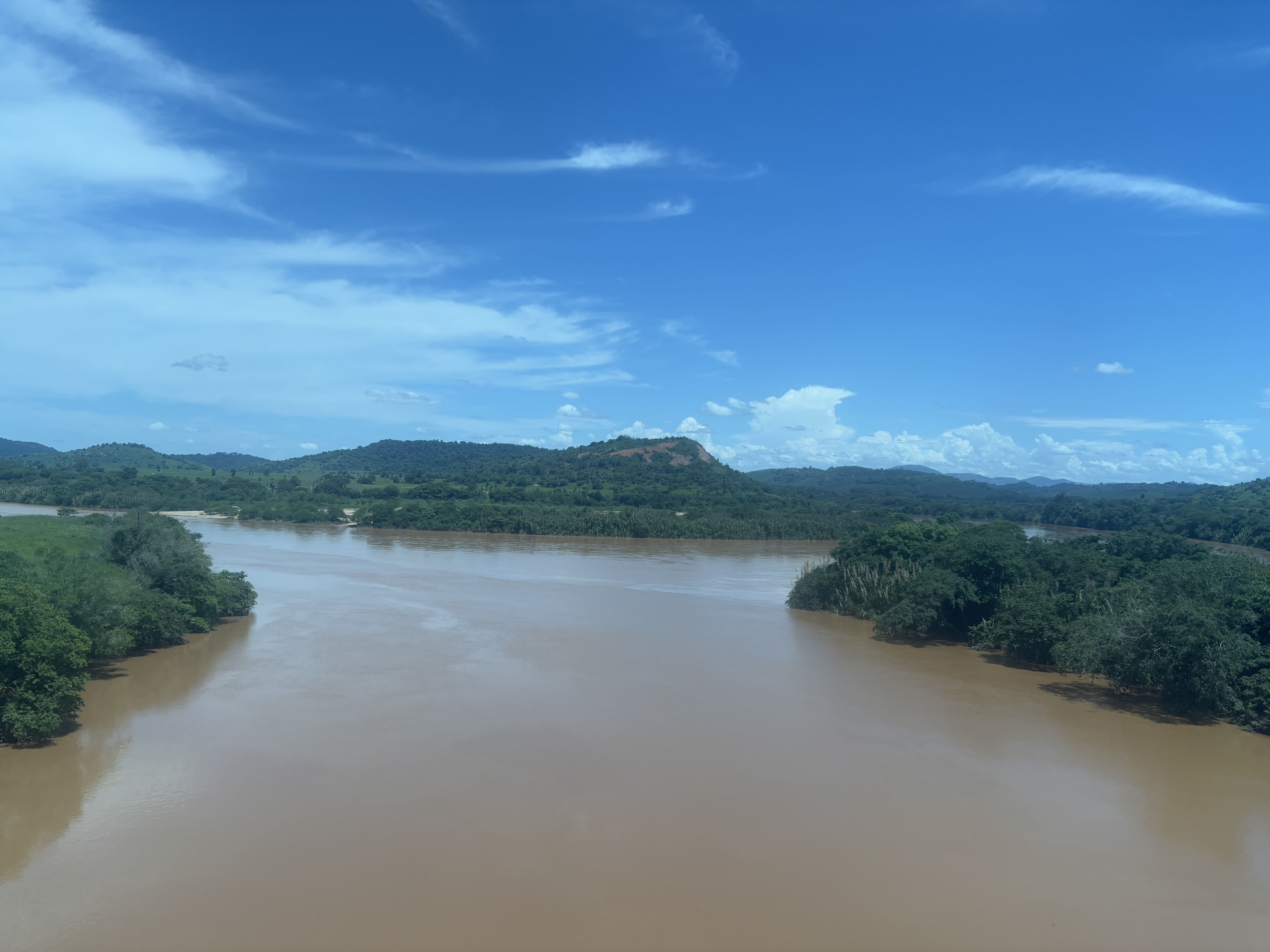
I got better photos through cleaner windows in the restaurant car.
Small television screens hang overhead, and family-friendly movies (Moana 2, Willy Wonka, Tom and Jerry, a few others that were even more forgettable) played throughout the trip, along with safety films about the train service. I didn’t particularly want to watch mediocre movies for 13 hours so didn’t test if these worked, but the headphone jacks located at each seat do, presumably, connect to the audio of these overhead screens. There were also subtitles in Portuguese.
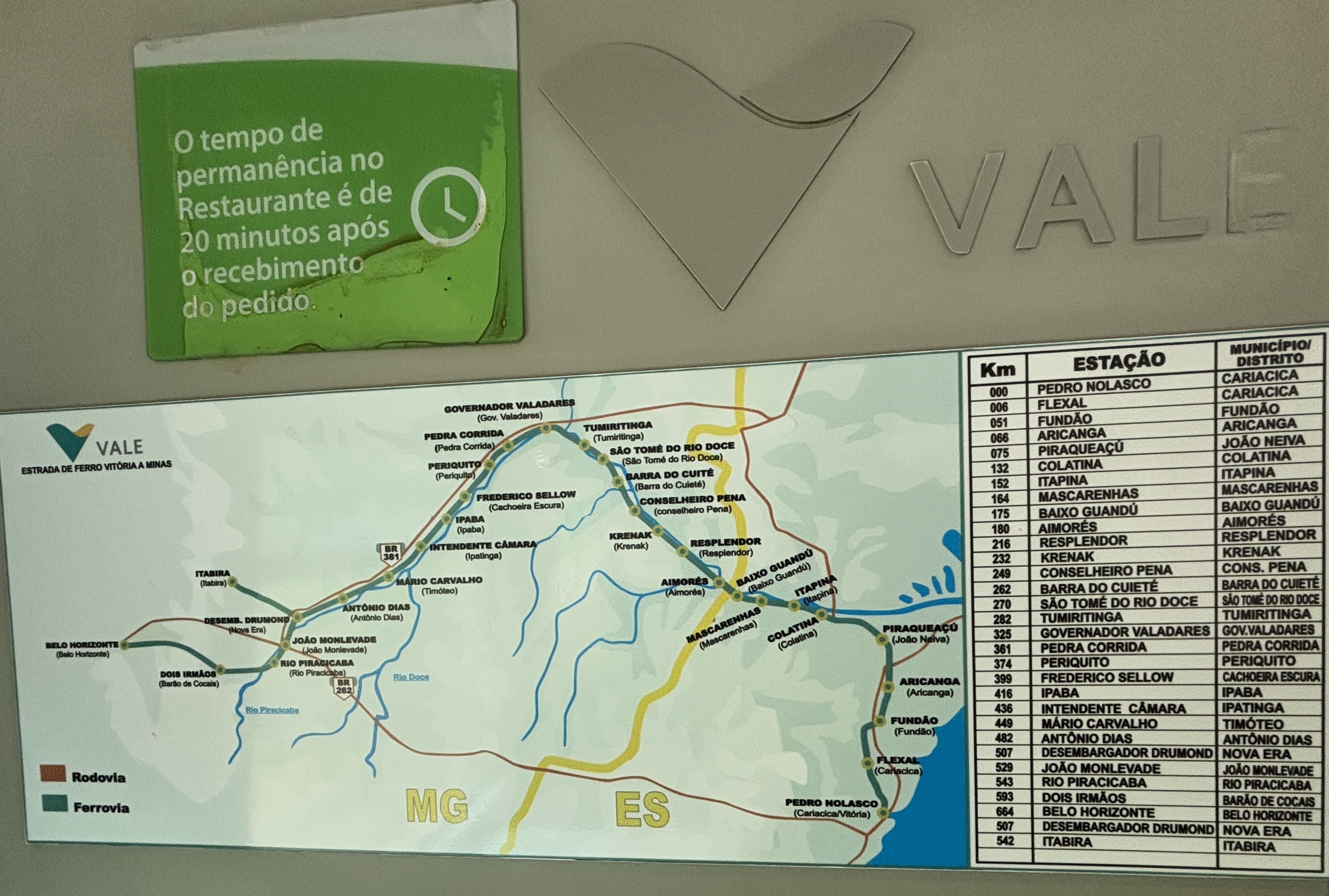
Our indirect route crossing two Brazilian states.
There are, unfortunately, no fresh air stops at any point along the journey: every stop is just long enough to let on those who need to get on, and off those who need to disembark. Platforms at stations other than the two termini are shorter than the train itself: if you are getting off midway through the journey, make sure to follow the flow of passengers walking through the train a few minutes before each stop, as not all doors will open.
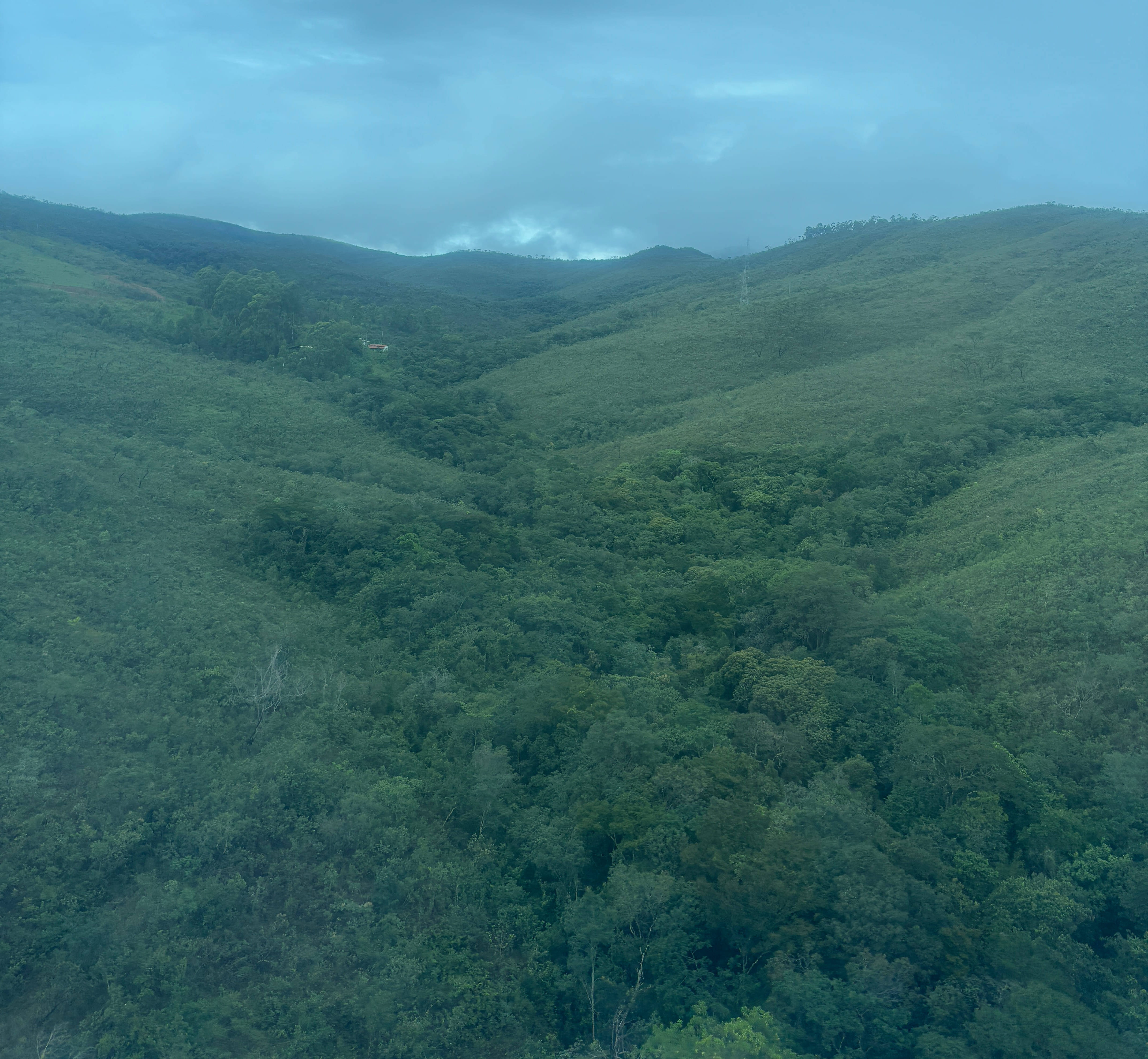
It wasn't actually that dark in the middle of the day, the outside of the train was just filthy.
Food
You are welcome to bring aboard your own food and non-alcoholic drinks, and I recommend you do so: while not outrageous, prices on board are higher than you’ll pay in supermarkets (a small bottle of water, for example, was R$5, which is more than you’d pay for 1.5L of water off the train). Alcohol is not sold and cannot be consumed on board.
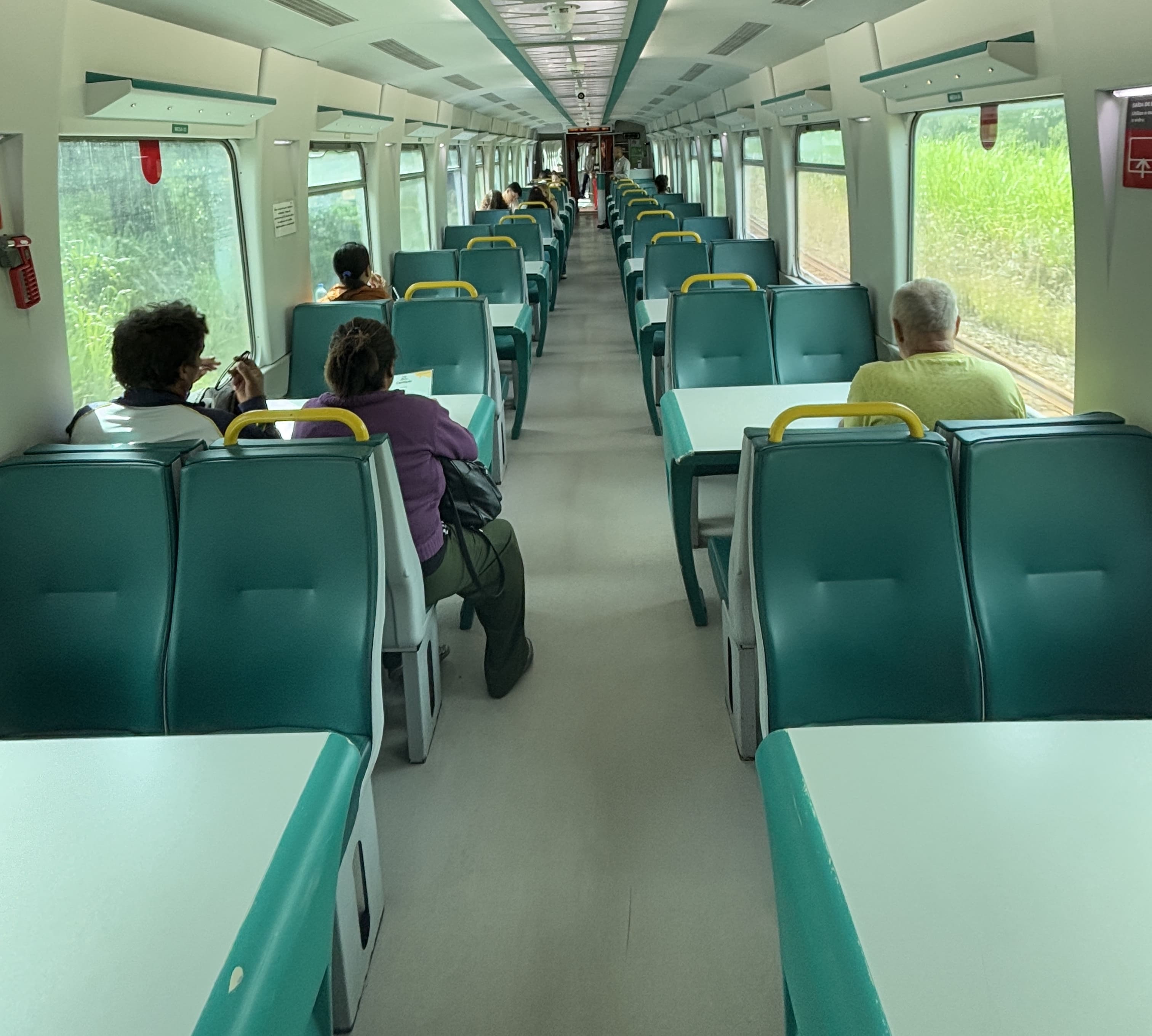
The dining car outside of meal times. It got much busier for the lunch and dinner rushes.
Staff regularly pass through the train with a trolley. You can buy drinks and snacks off of this trolley, and also order hot meals to be delivered to your seat. Seeing as I had the time, I opted instead to eat dinner in the dining car (there is a separate lanchonette car where meals are reheated, and where you can buy food to take back to your seat).
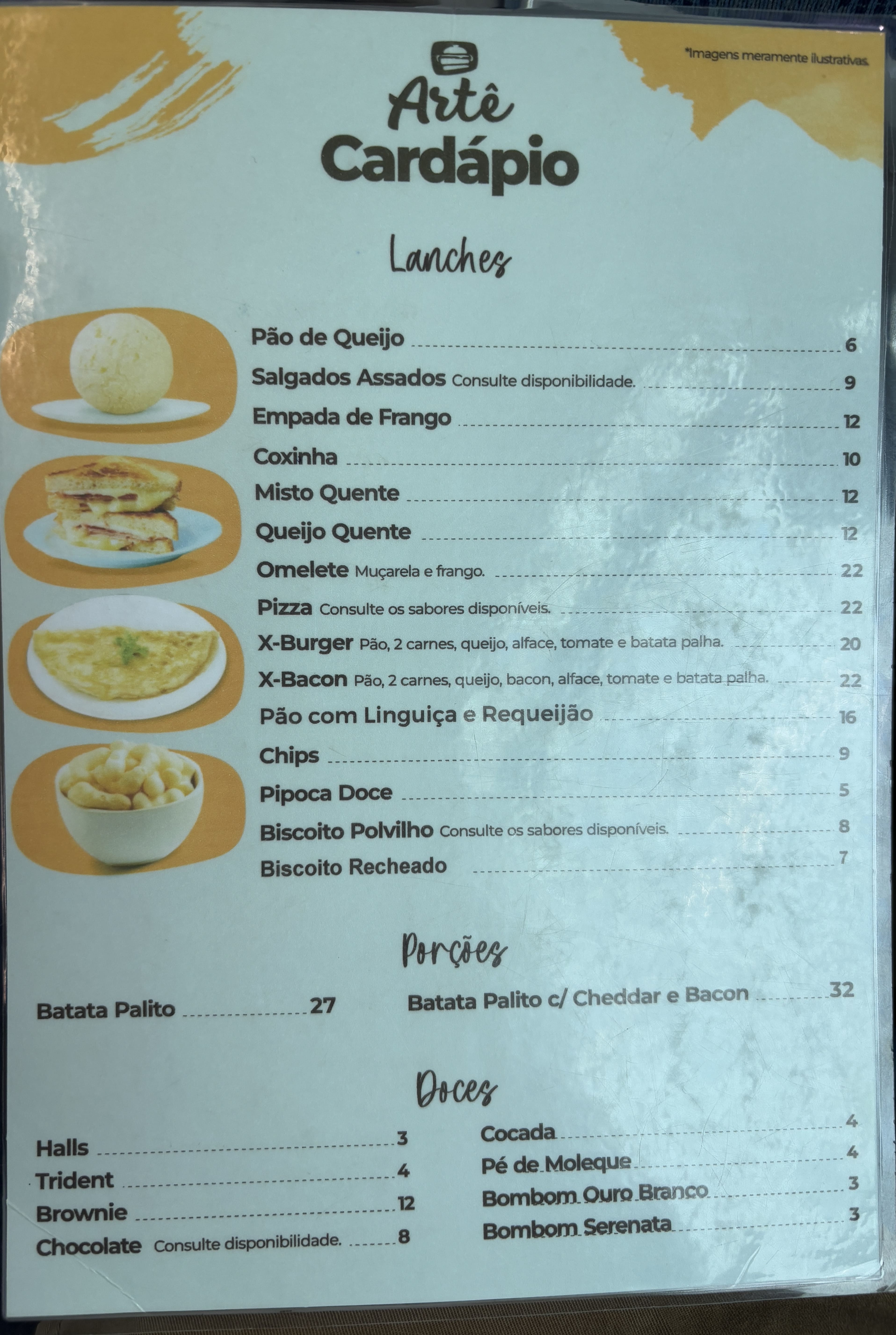
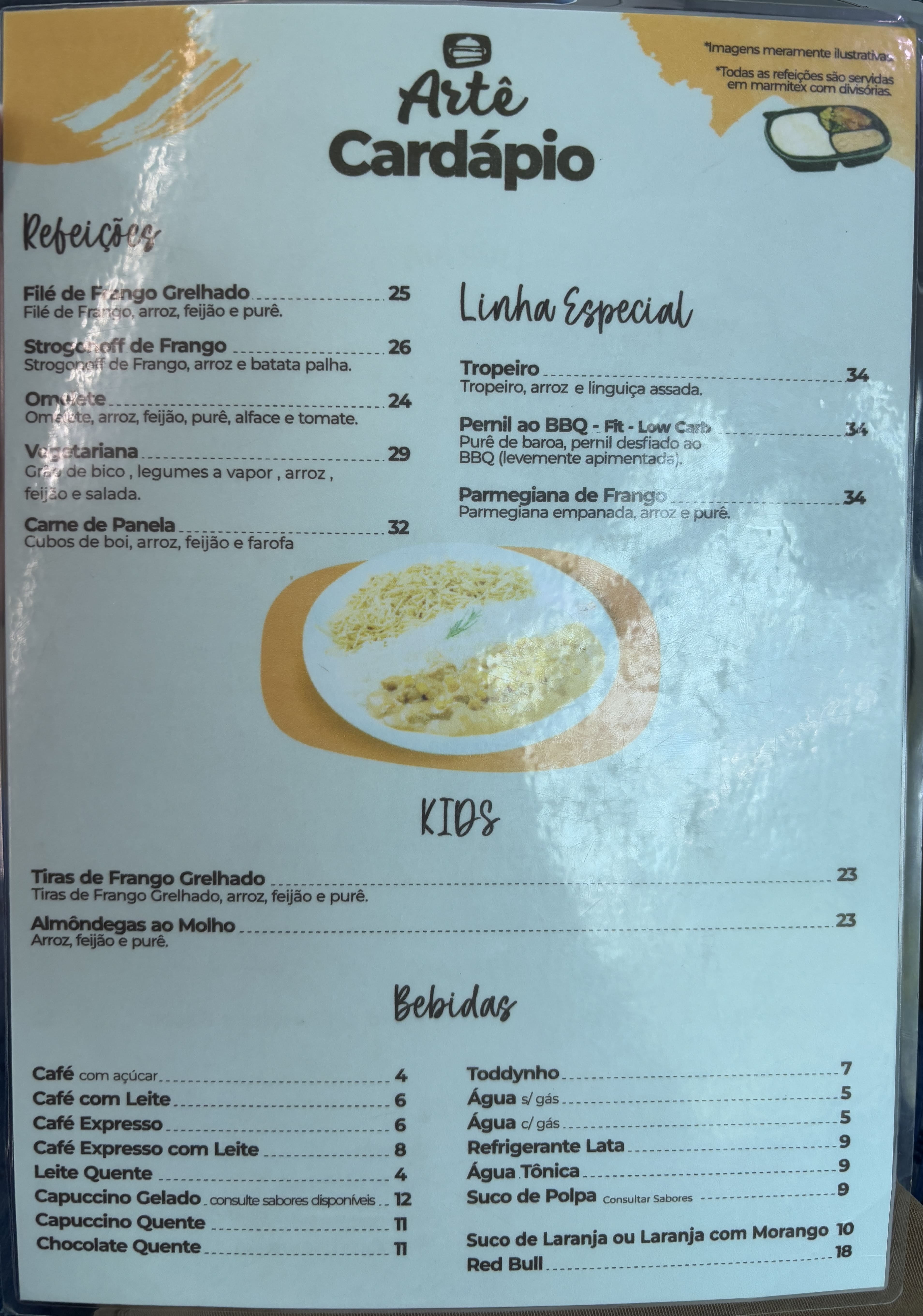
This car gets busy around lunch and dinner times, and a 20-minute seating limit from the time you receive your food (which itself takes longer than 20 minutes) is posted. Signs also prohibit reading material and laptops in the dining car, presumably also to discourage extended stays (though I did bring a book, and ignored these signs during my extended wait for food).
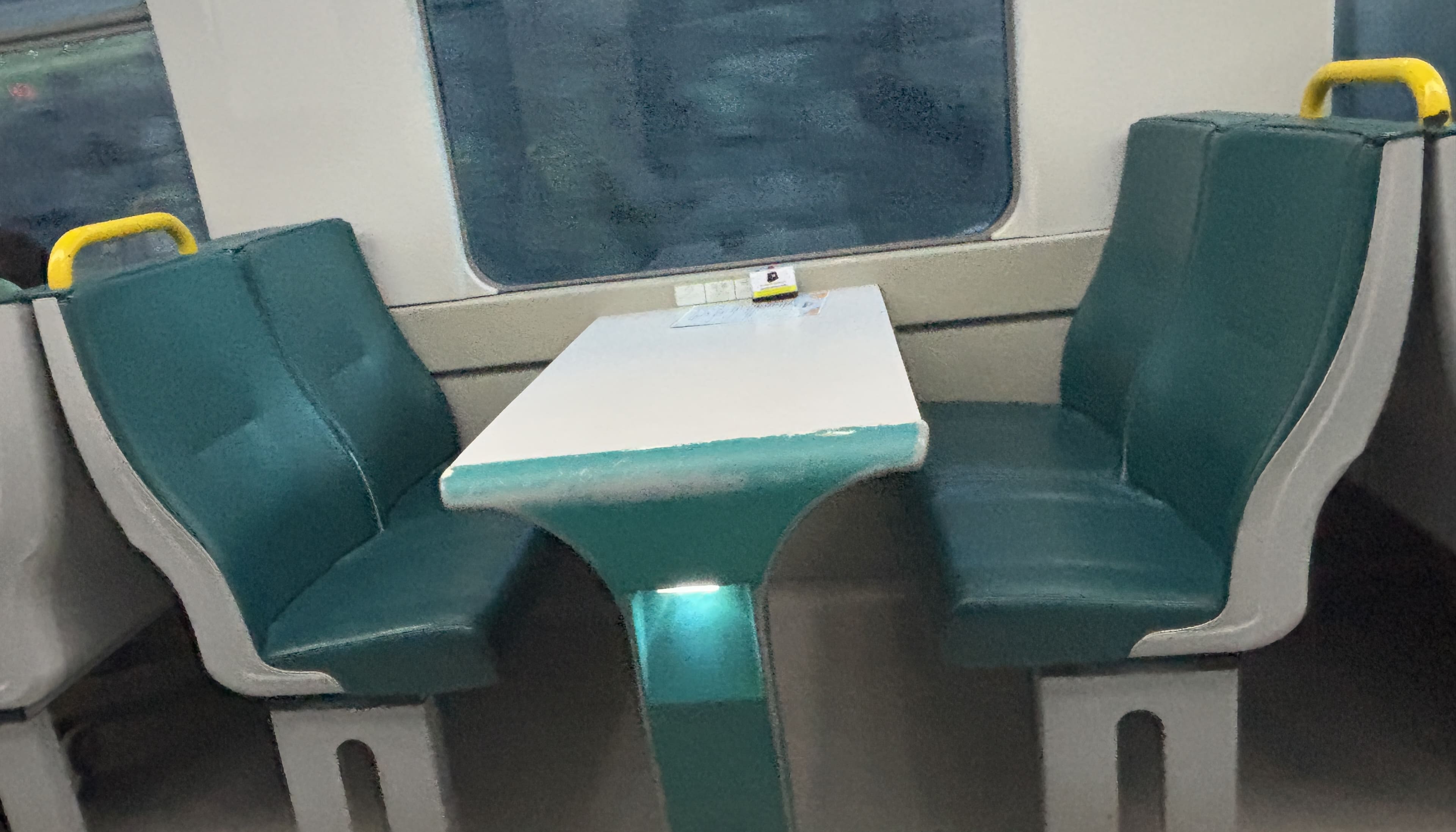
You press a small red button and wait. Less patient passengers pressed this every few minutes, to no effect.
You order by pressing a button located at each table. After a nine-minute wait, a staff member came to take my order for chicken stroganoff and a cup of coffee (I was both hungry and tired). This came to R$30: card payments are accepted, but only when the payment machines have service. Vale clearly uses a more reliable network than Vivo, since I was able to pay by card even when my phone had no service.
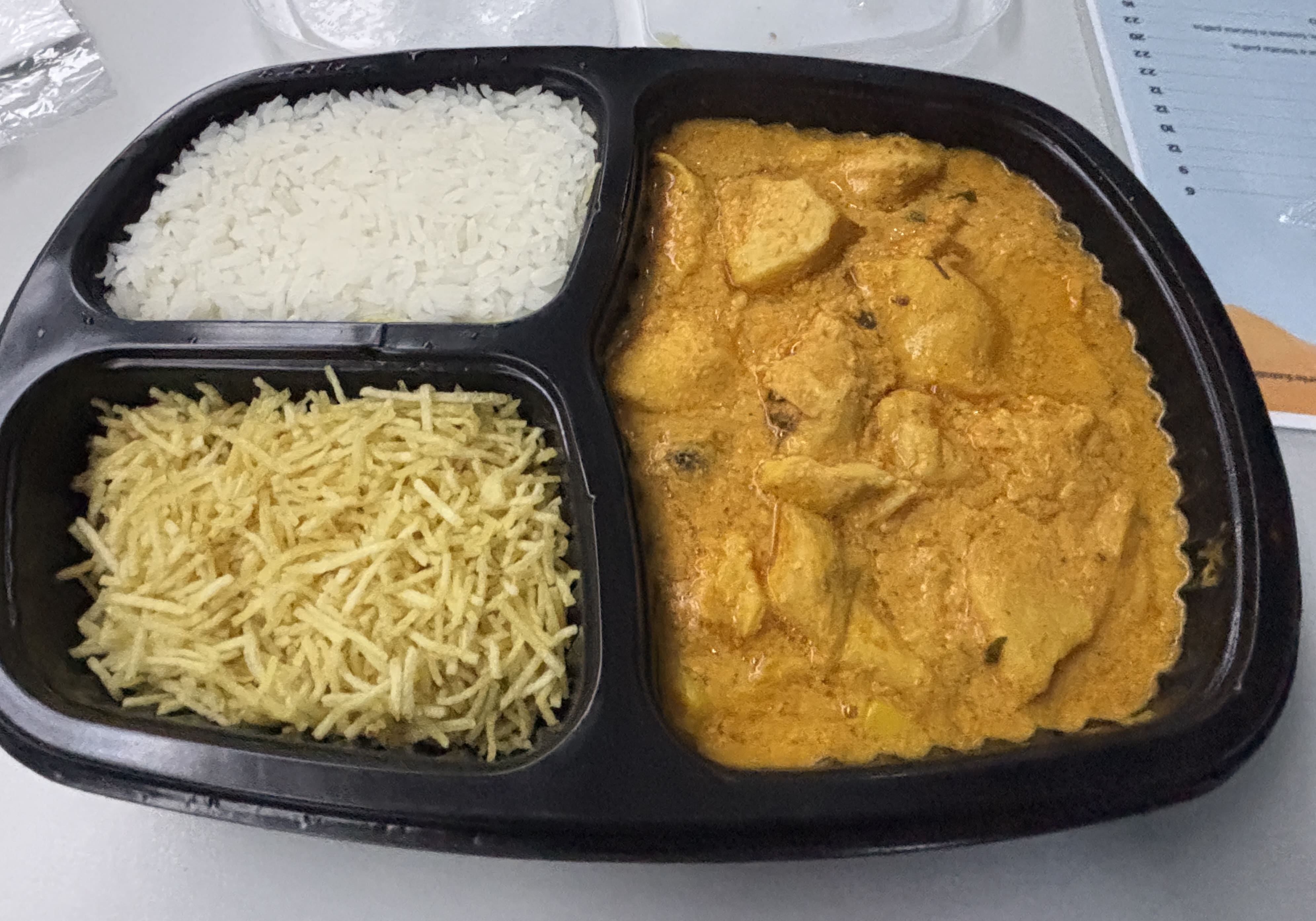
The presentation isn't much, and the taste isn't much better.
About 20 minutes later my food arrived, a TV-dinner served in a plastic tray. It was hot and salty: this trip definitely isn’t a culinary experience. The coffee wasn’t bad though.
Arrival and Final Thoughts
We came to a halt at Pedro Nolasco station, serving Vitória, at 20:49, just under 14 hours after setting off. Since this trip occurred mostly during daylight hours, the scenery made these 14 hours feel much shorter. I read my book, listened to music, and watched the world glide by. I wouldn’t do it again, but I’m glad I made the trip by train.
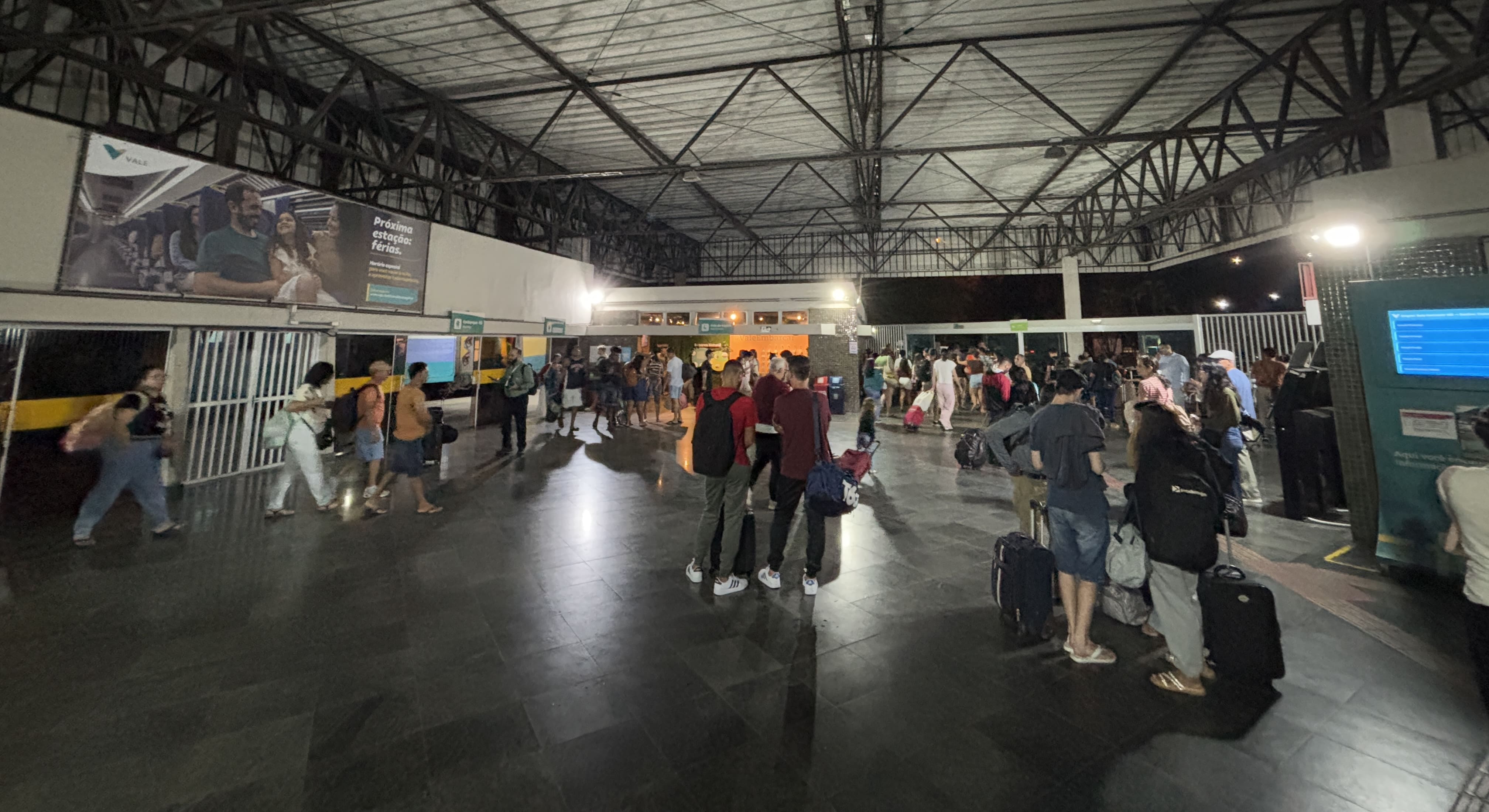
Our final stop after nearly 14 hours and over 900 kilometres: Pedro Nolasco station, just outside Vitória.
Very few passengers in my car made the full trip: the cheapest flights are around double the price for a third of the time. But, for families making the trip the cost savings can be significant. For intermediate stations, the train offers a safe and reliable alternative to busses.
There’s a reason why the Vitória-Minas Railway doesn’t make any tourist brochures in Brazil. If you’re short on time, this trip isn’t for you. But if you can spare a day to disconnect and relax, travelling by train is a wonderful way to get a taste of the landscapes over which you would otherwise fly.