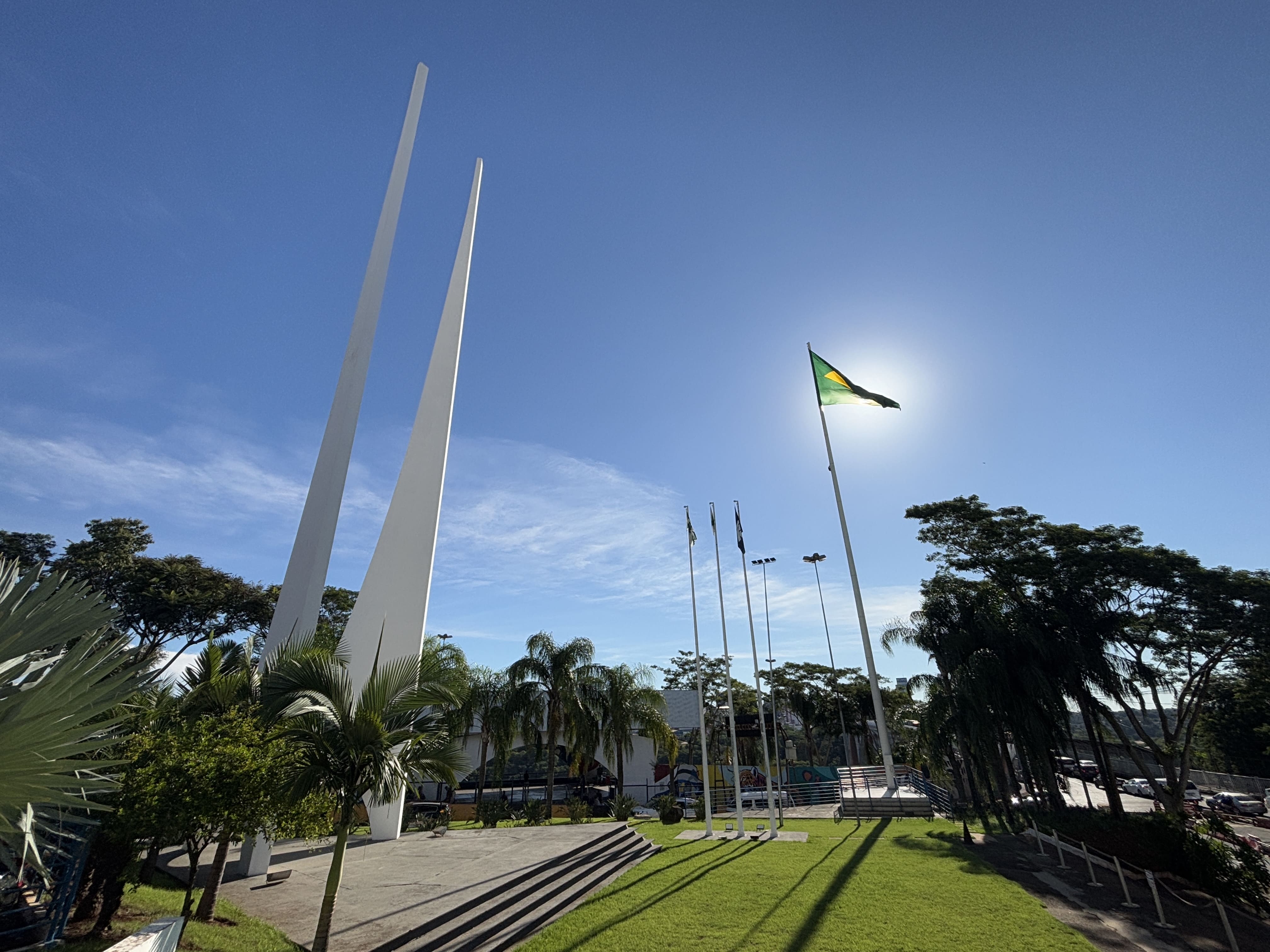
Crossing by Foot from Foz do Iguaçu, Brazil to Ciudad del Este, Paraguay
Crossing by foot is easy once you know where to go, and often much quicker than languishing in traffic aboard a cross-border bus.
Introduction
The border between Foz do Iguaçu, Brazil and Ciudad del Este, Paraguay is open: anyone can come and go, subject to rare and random inspections. You don’t need to be stamped in and out, and indeed the border is not set up to make doing so easy—but making sure you officially enter and leave Brazil and Paraguay is essential if you intend to venture further into either country, as I did.
Getting to Friendship Bridge
The International Friendship Bridge links Foz to CDE, and is open seven days a week. In CDE the bridge lies at the heart of town, and most hotels are within walking distance. From Foz you have a few options:
- Uber: The most convenient option, and not terribly expensive. Expect to pay around R$15-20 for a ride from centro to the border.

These busses link both Argentina and Brazil and Brazil and Paraguay.
- International Bus: Green busses from EasyBus, yellow busses from Expreso Paraguay (CDN), and multi-coloured busses from Nuestra Señora de la Asunción (NSA) run directly from centro in Foz across the border and into CDE. These busses do not stop at the border: if you need to get your passport stamped, you will need to ask to be let off, which defeats the point of taking the express bus. You’re better off taking…

These NSA busses will also get you into Paraguay. Look for a bus showing Brazilian/Paraguayian flags and/or the word internacional if you're not sure.
- Local Bus: Fare R$5, cash or credit card are both accepted. Look for any bus displaying a destination of Ponte: this means “bridge”, and the bus will pass nearby the Friendship Bridge. I took route 010, which dropped me about 100 metres from Brazilian immigration.
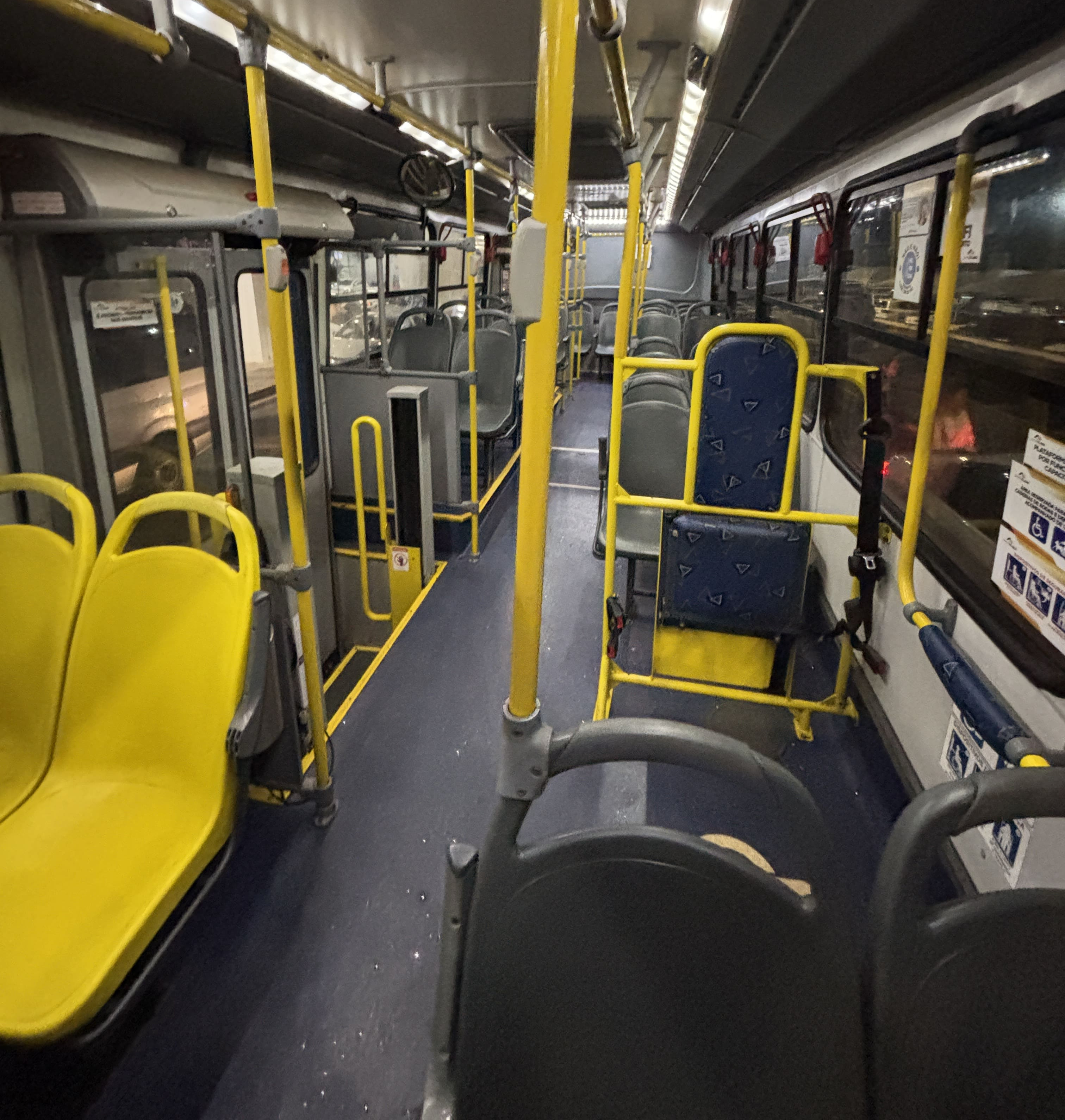
Empty interior of a local bus in Foz. This is actually line 120 linking centro, the airport, and national park, but...the busses are all similar.
Exiting Brazil
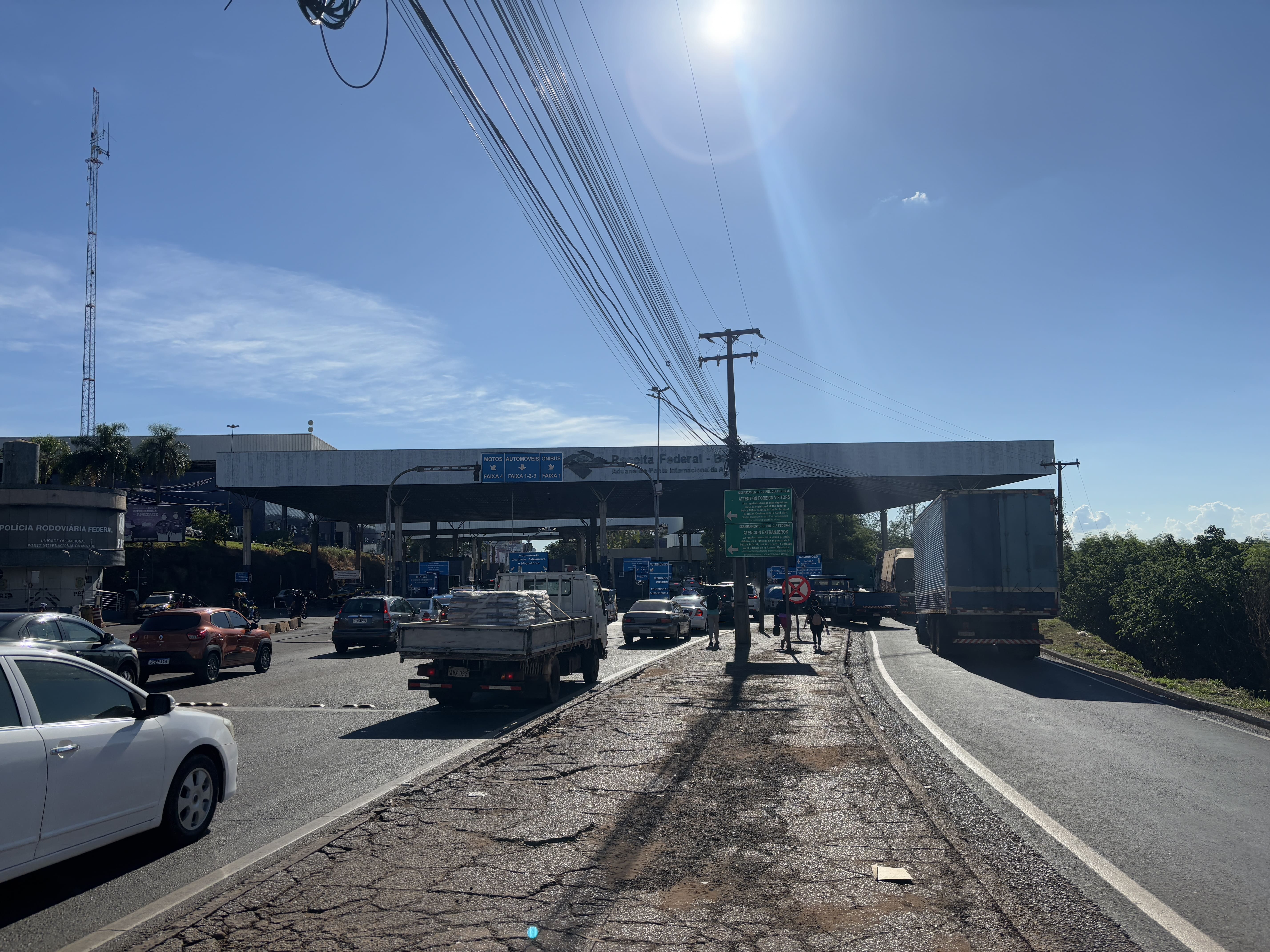
There's not much importance placed on pedetestrian traffic on the Brazilian side.
The area around the bridge, on either side, is not pedestrian-friendly: you walk down the median, sometimes on the road. It feels less safe than it is, drivers know to watch for pedestrians and as long as you pay attention, you’ll be fine.
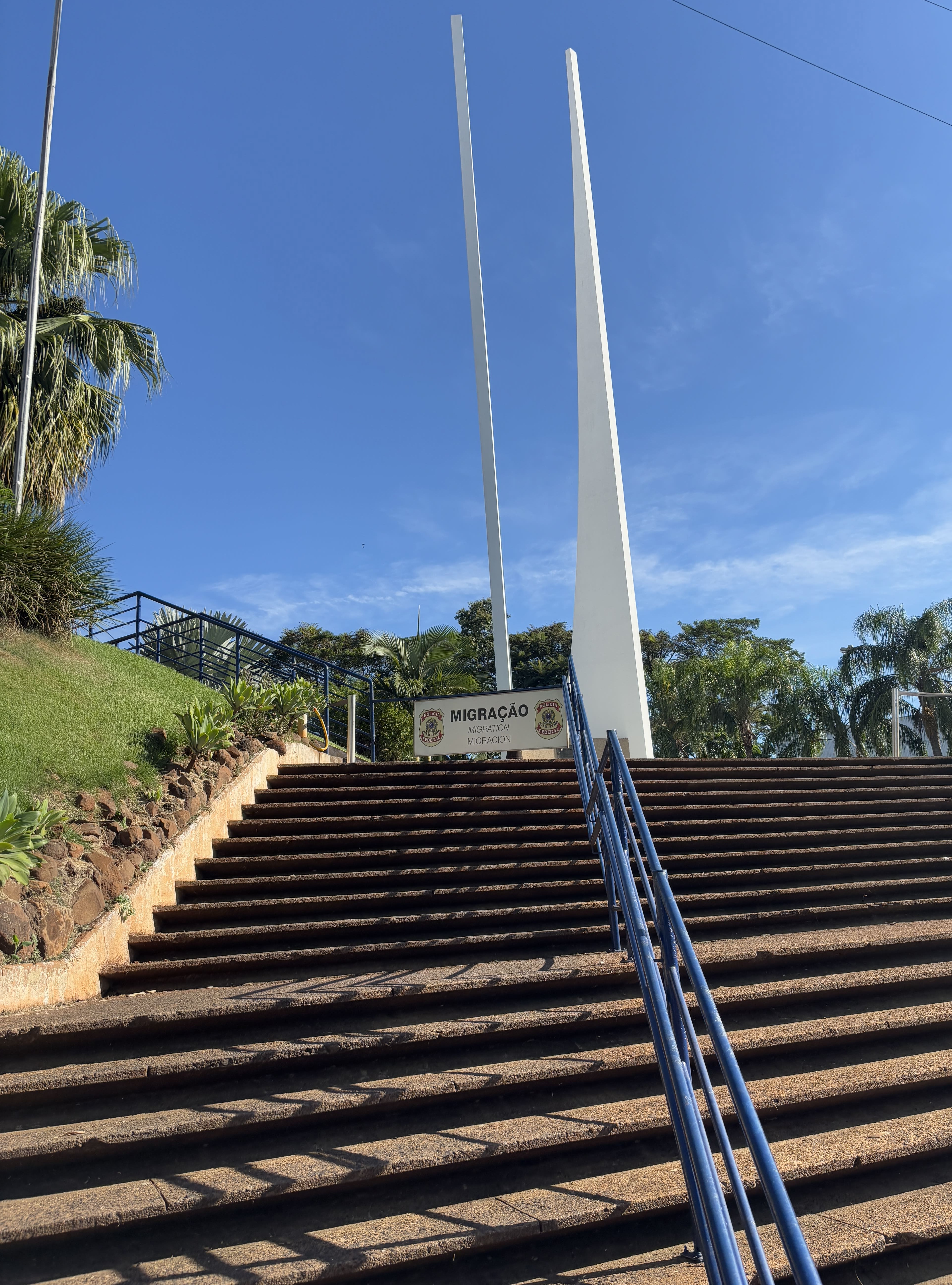
Look up for the monument...and also for the stairs you'll have to climb.
Once you reach the bridge itself, pedestrians are kept separate from cars and lorries the whole way across. To get stamped out, look up: there is a large monument and Brazilian flag, behind which is the immigration offices. Follow signs for migração, which will lead you up a few flights of stairs (this whole process isn’t advisable if you have multiple bags, or mobility issues). At the top, turn right and you will see a small kiosk. There are windows on both sides and there are a lot of people simply milling about, waiting for more complex immigration needs to be resolved. Move forward, present your passport, confirm that you are in fact leaving Brazil for more than just a day trip, and you’ll be stamped out. It took less than a minute for me, once I knew where to go.
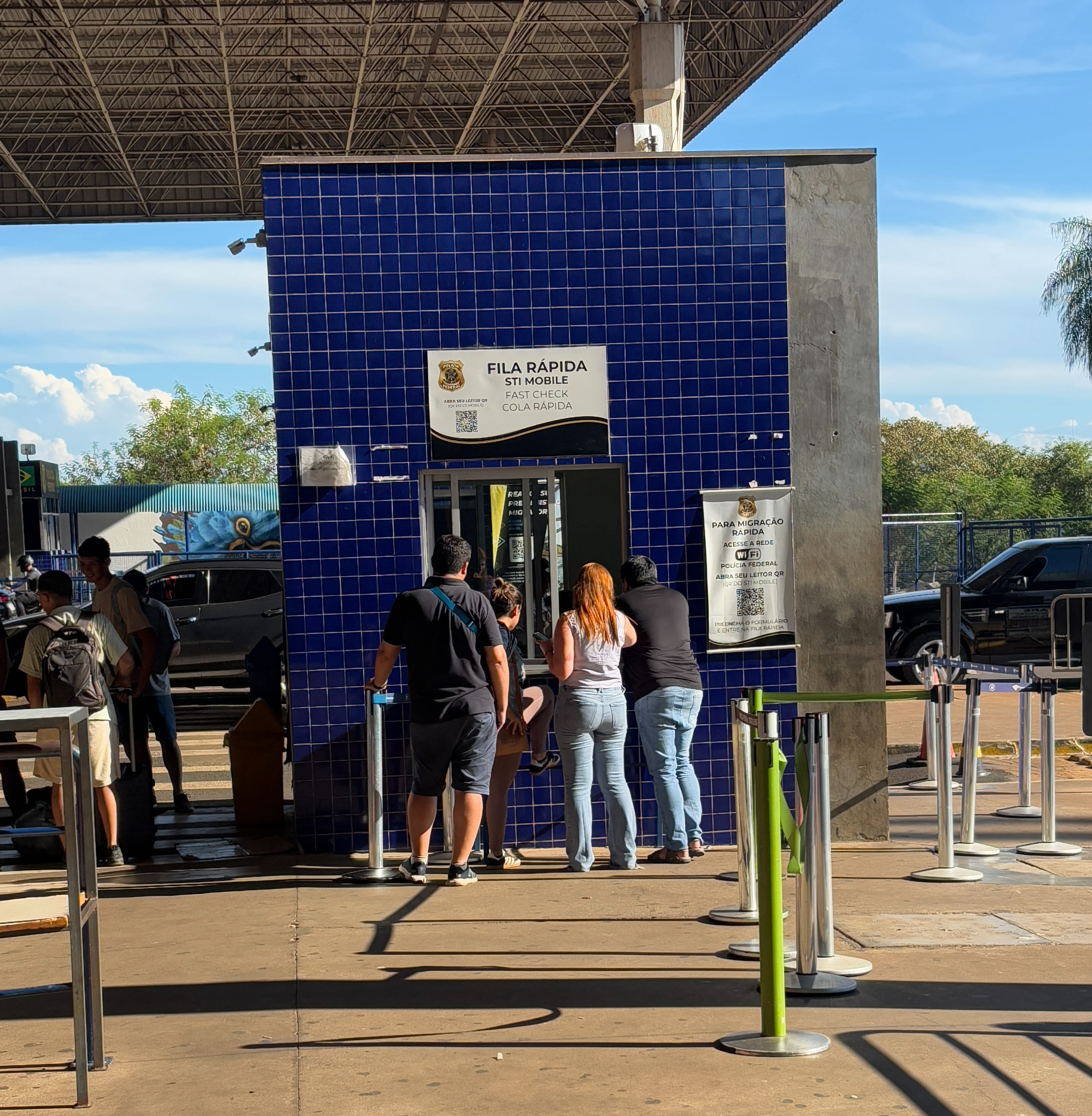
It isn't much, but at least it was quick. If it isn't, then you'll be waiting in the sun.
The Brazilian side has WiFi, washrooms, and a water bottle refill station.
Crossing the Bridge
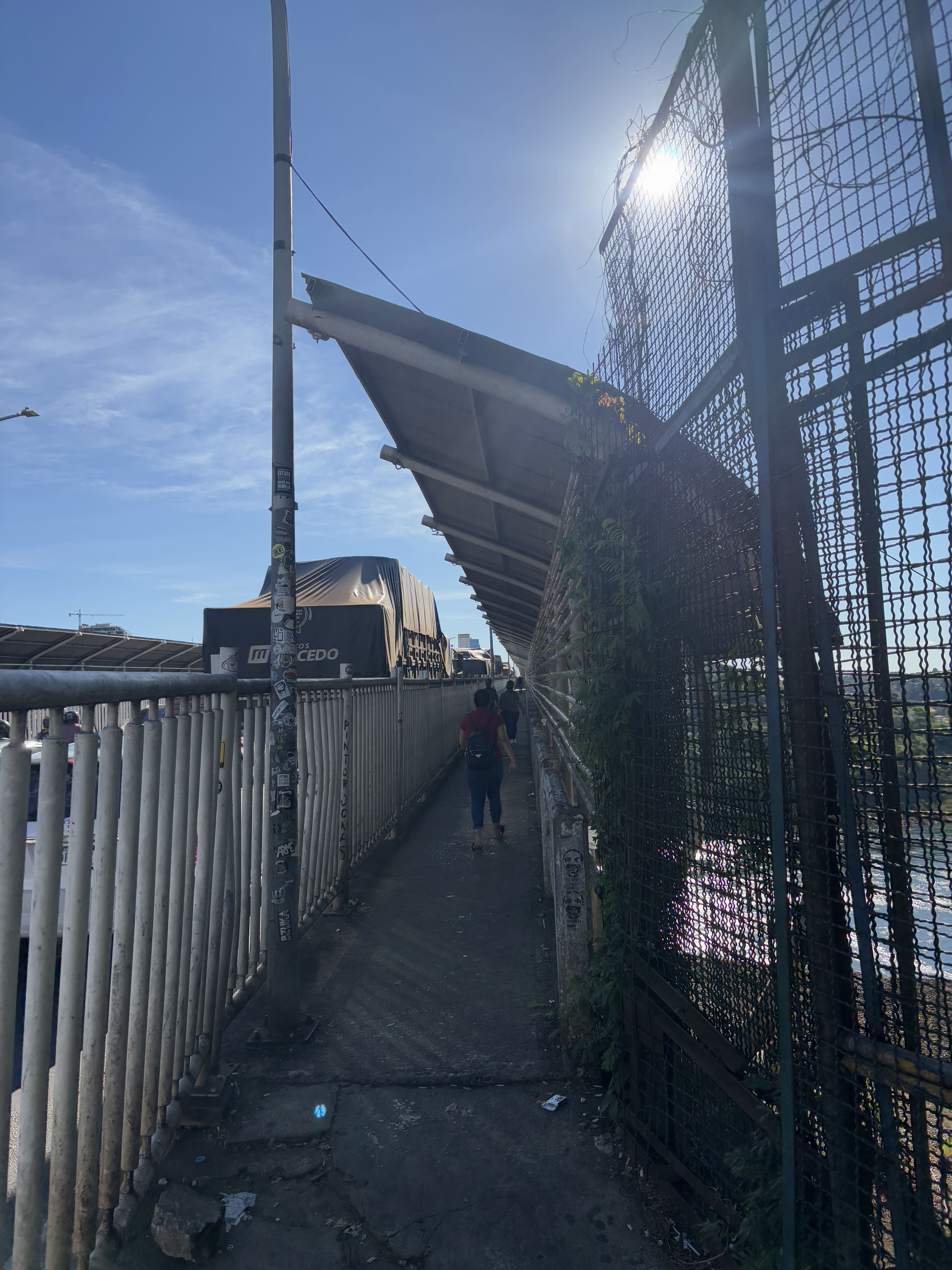
As long as the sun is facing the right way, you get shade.
While both sides of the bridge (keep to the right when crossing into Brazil or Paraguay) are shaded, this cover is only partial: avoid crossing in mid-day, or you will be in for a very hot ten-minute walk. The sidewalk is in reasonably good condition, by South American standards, and I was able to wheel my carry-on bag most of the time.
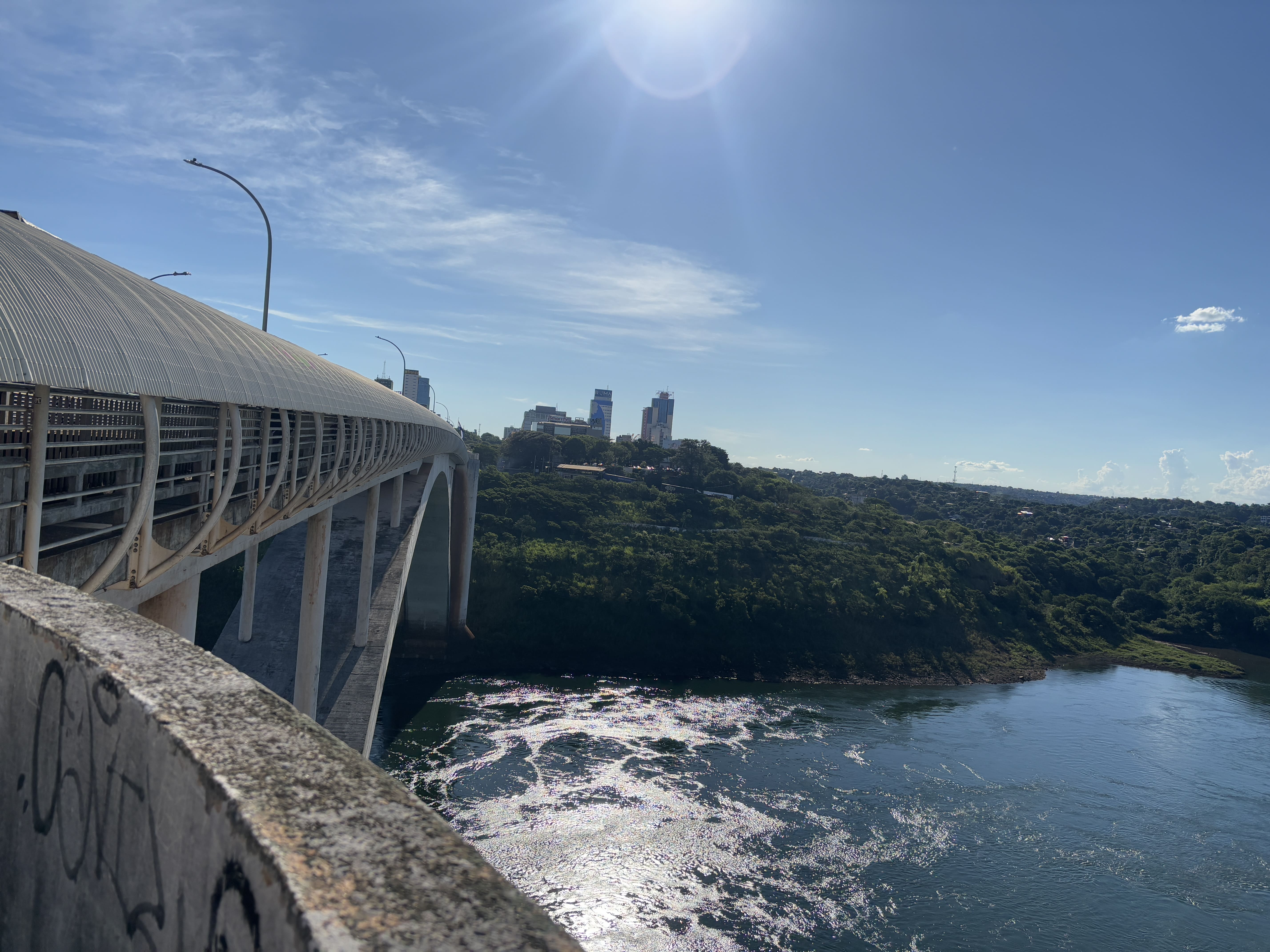
It sure beats the view from a bus.
You get lovely views of the Paraná River, with two viewpoints along the way (unshaded).
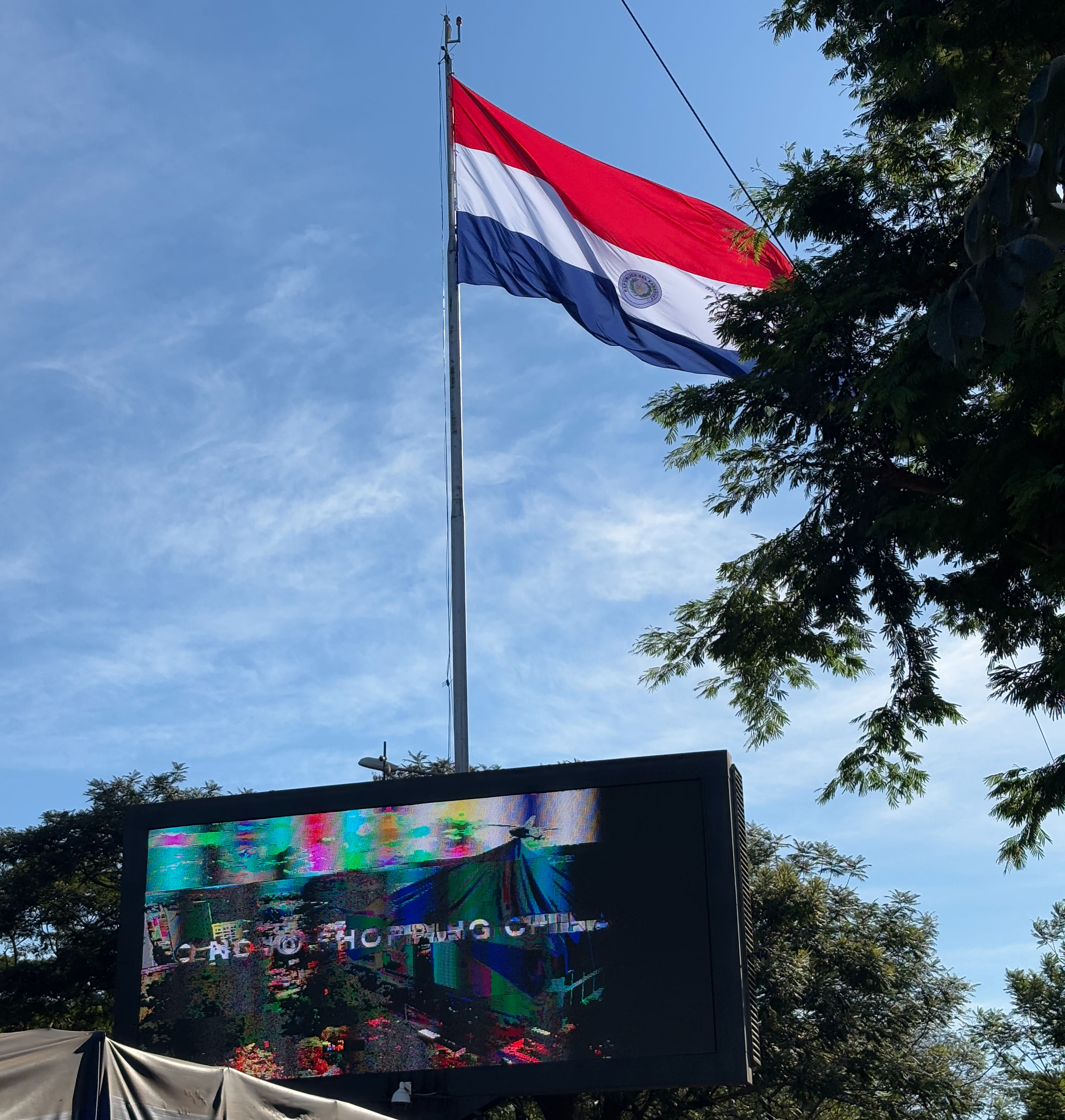
If you somehow get lost on the one-way walk, just look for the flag. And the ads.
Entering Paraguay
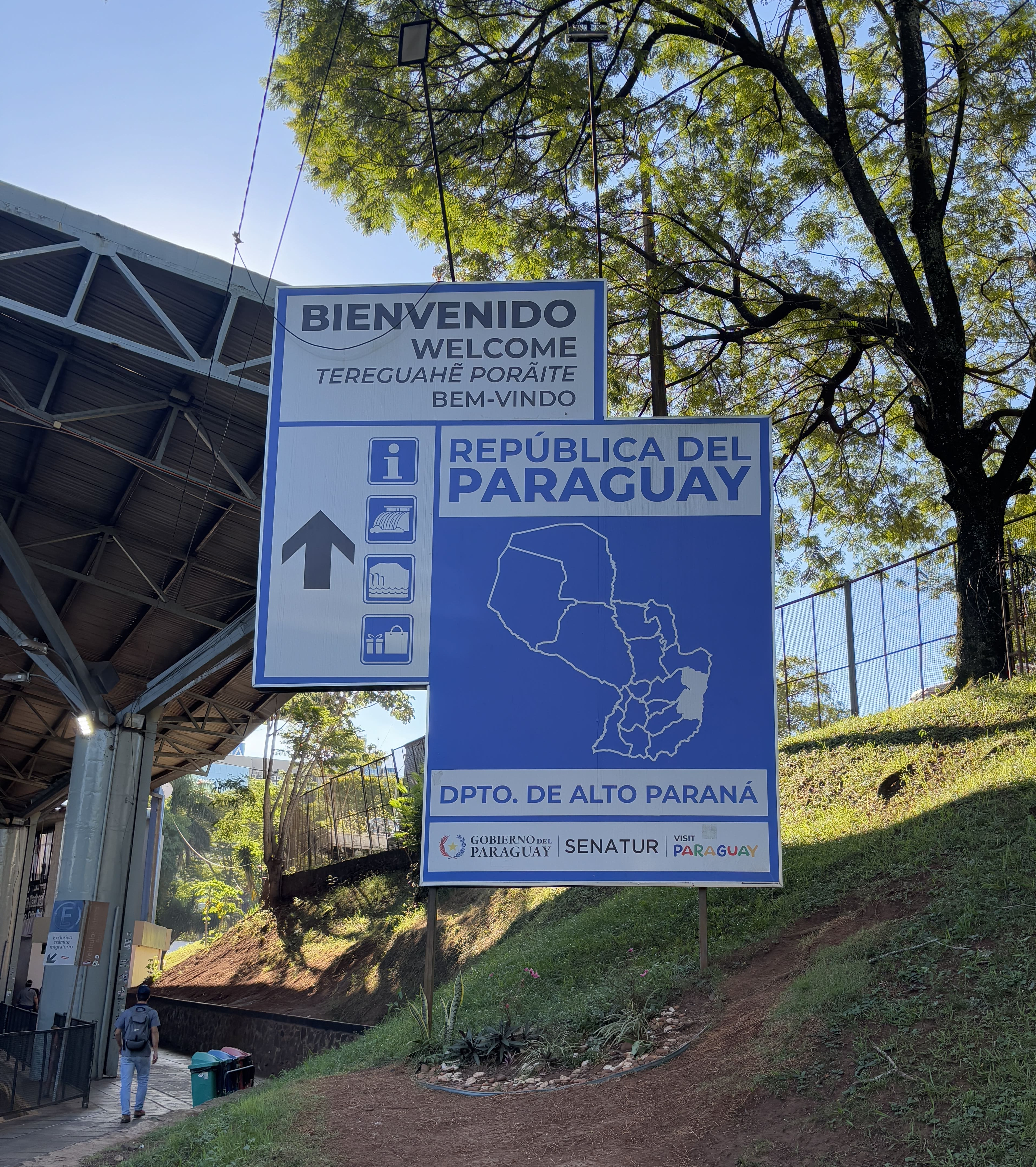
Keep walking past the official welcome sign, immigration is about another 25 metres ahead.
Look for a sign displaying migraciones: this is where you get stamped in to Paraguay. The Paraguayan side did have a line, but I was through in under five minutes. Border officials asked how long I would stay and where my first hotel reservation was, but didn’t ask for more details when I simply said Asunción.
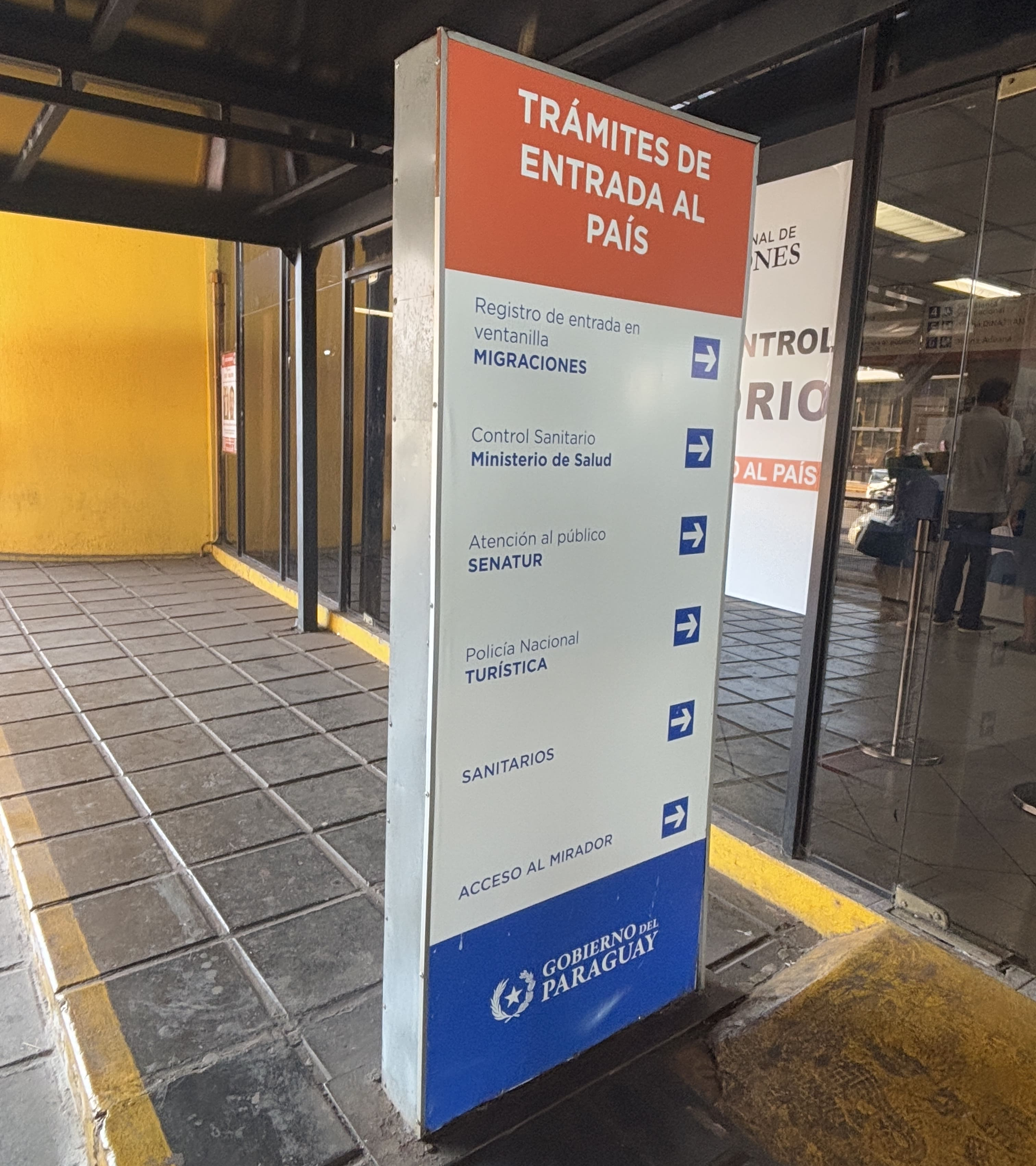
Through sliding glass doors you will find a sight recognisable the world over: pointless bureaucracy.
The Paraguayan side has washrooms and, unlike Brazil, you will wait inside, not exposed to the sun (though without air conditioning, it isn’t much better).
Top Tips
- Cross Early (or Late): While the walk isn’t long, it will feel that way in the mid-day sun. The shade on the bridge crossing from Brazil will leave you exposed until about 2 p.m., and before that you’ll be exposed crossing from Paraguay. It’s best to cross by foot early in the morning or late in the afternoon/into the evening.
- Pack Light: You’ll have to climb stairs to enter/exit Brazil, and the pedestrian walkway across the Friendship Bridge isn’t in perfect shape. If you have a checked bag, you’ll be in for a rough time…better to cross by bus and return for border formalities.
- Don’t Skip the Stamps: While it is unusual to be able, encouraged even, to meander on in to another country, this system caters exclusively to day-trippers. If you wind up flying out of Asunción or Rio with no entry stamp, you risk fines.