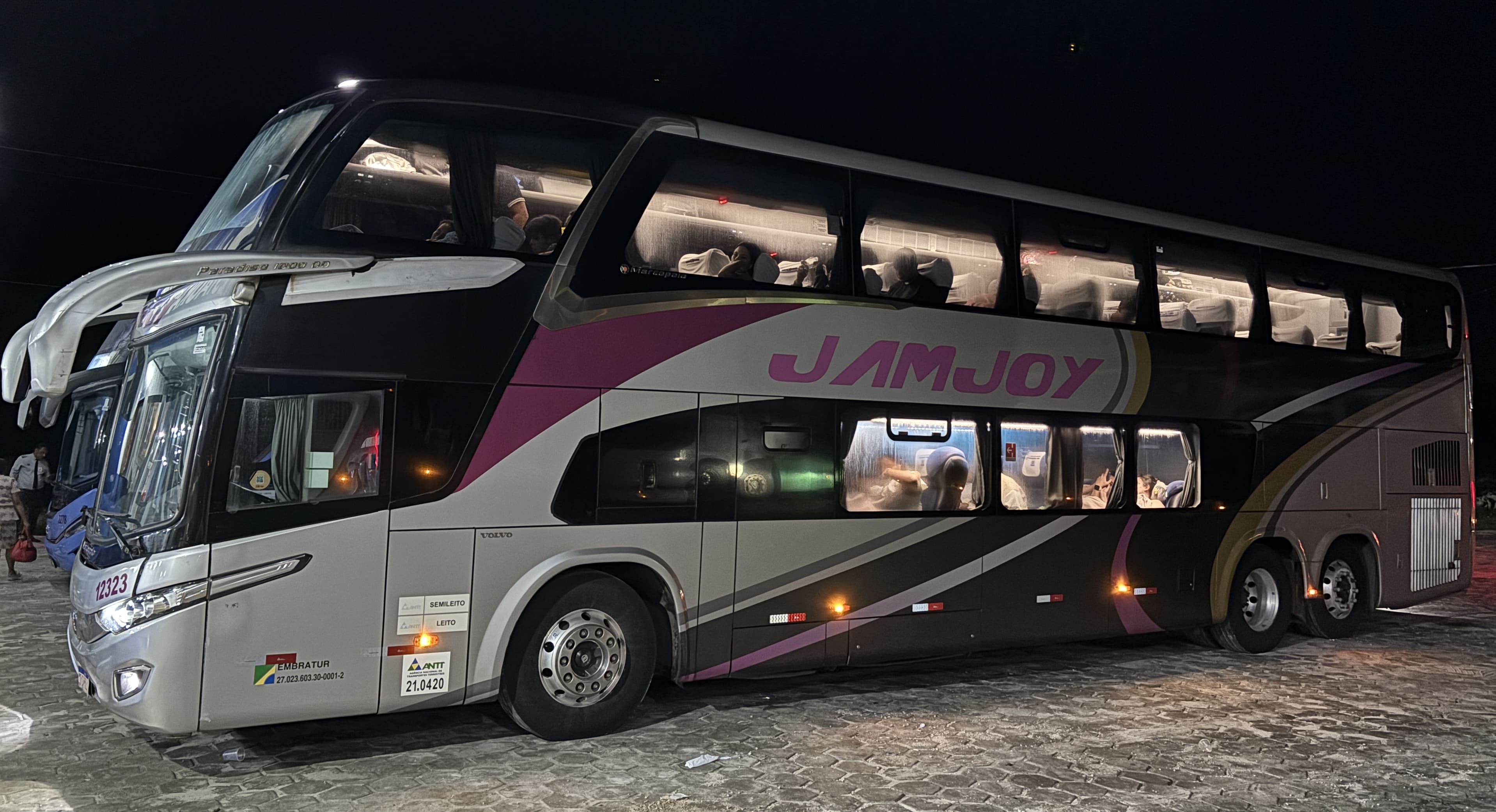
Jamjoy Sleeper Bus from Belém to São Luís
Sleeper busses are to Brazil what sleeper trains are to Europe: convenient, economical transportation, allowing you to combine the cost of a night's lodging with the cost of transportation. Dozens of major operators, each with their own regional strongholds, compete for passengers on both cost and comfort. While there were some letdowns, my nearly-600 kilometre journey between the capital cities of Pará and Maranhão was quick, affordable, and relatively comfortable. Read on to see what you can expect on a Brazilian sleeper bus.
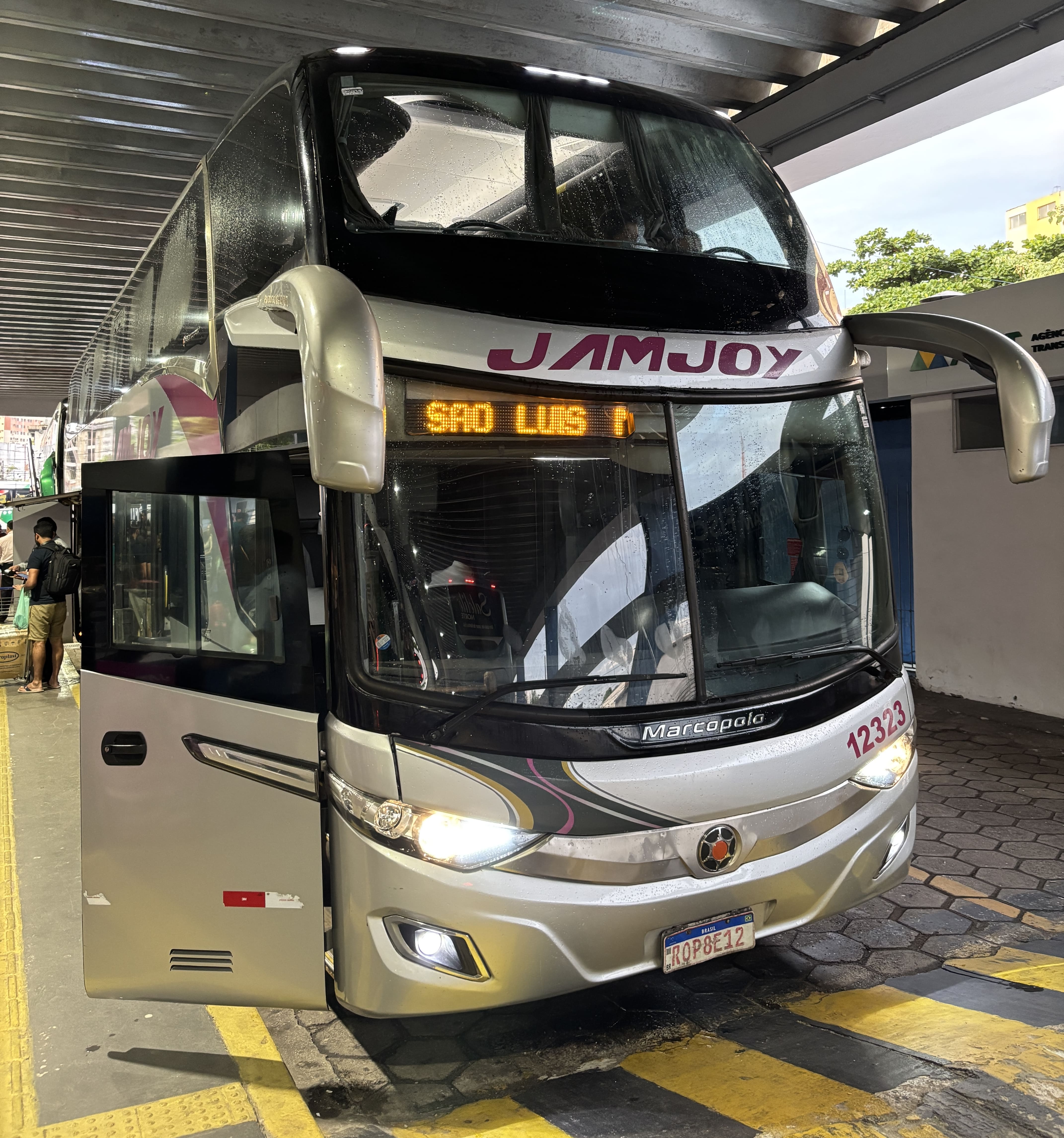
Our chariot for today's long-distance ride.
Tickets and Boarding
Depending on the company, sleeper bus ticket sales usually open 30-45 days in advance. I booked my ticket exactly 30 days ahead of departure, and had my choice of seats. Booking domestic travel in Brazil can be tricky: you often need a Brazilian tax identifier (CPF) not available to tourists, foreign credit cards are not always accepted, and even the mandatory address fields when booking domestic tickets sometimes refuse to allow non-Brazilian addresses. I have been finding ways around these, but thankfully Jamjoy’s website was easy to use and foreigner-friendly: I was able to use my passport and Canadian contact information with no problems.
Booking domestic travel within Brazil is not always easy for visitors, but Jamjoy made the process surprisingly simple.
There are two common types of seats on sleeper busses: “semi-leito” (literally: semi-bed) and “leito”. The cost difference is often minimal, but the comfort difference is extreme: semi-leito seats are closer to a seat than a bed, offering generous recline but you will still be sitting mostly upright all night. On my bus, semi-leito was arranged 2-2 whereas leito was 2-1, offering a major difference in privacy as well.
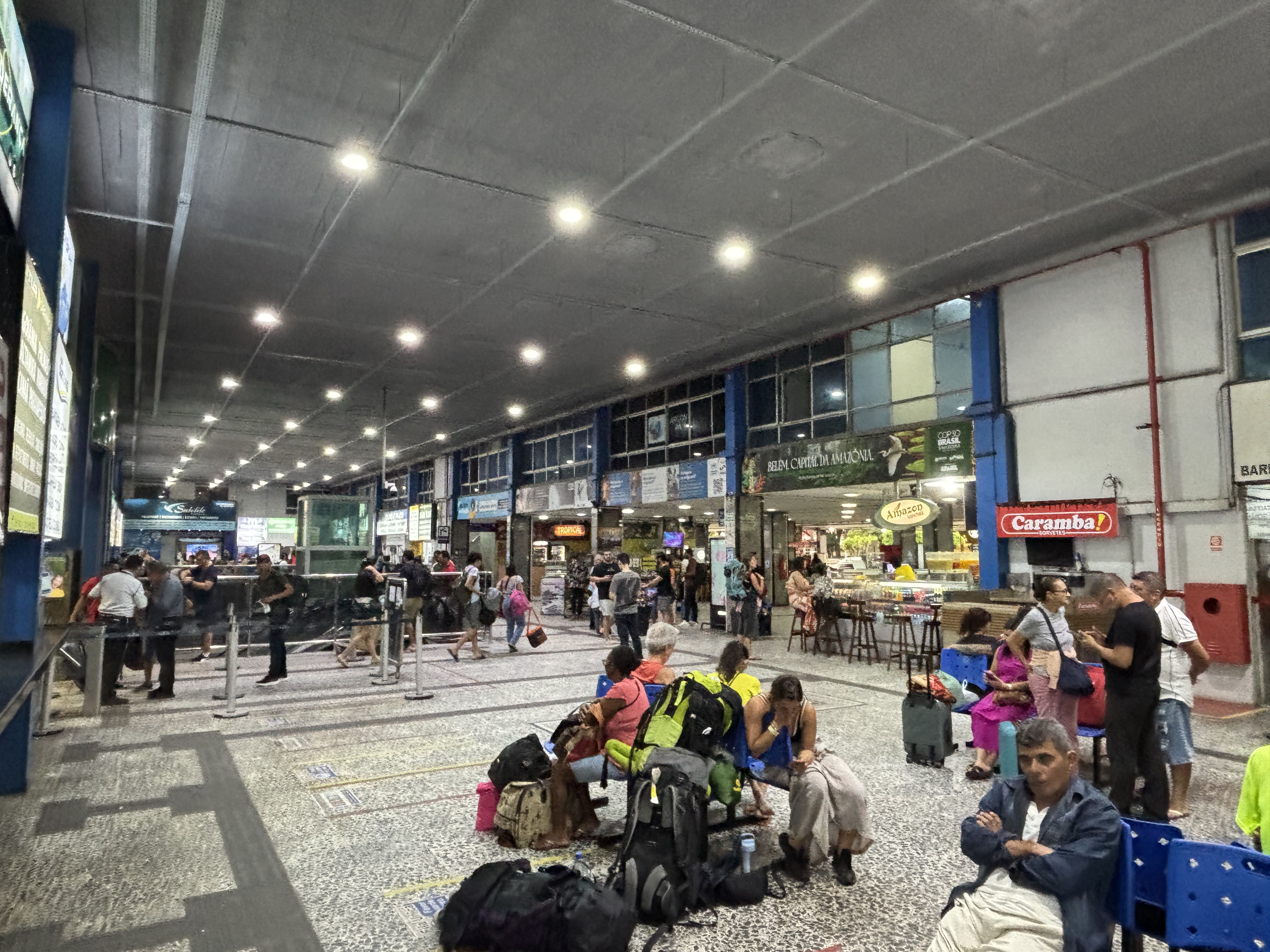
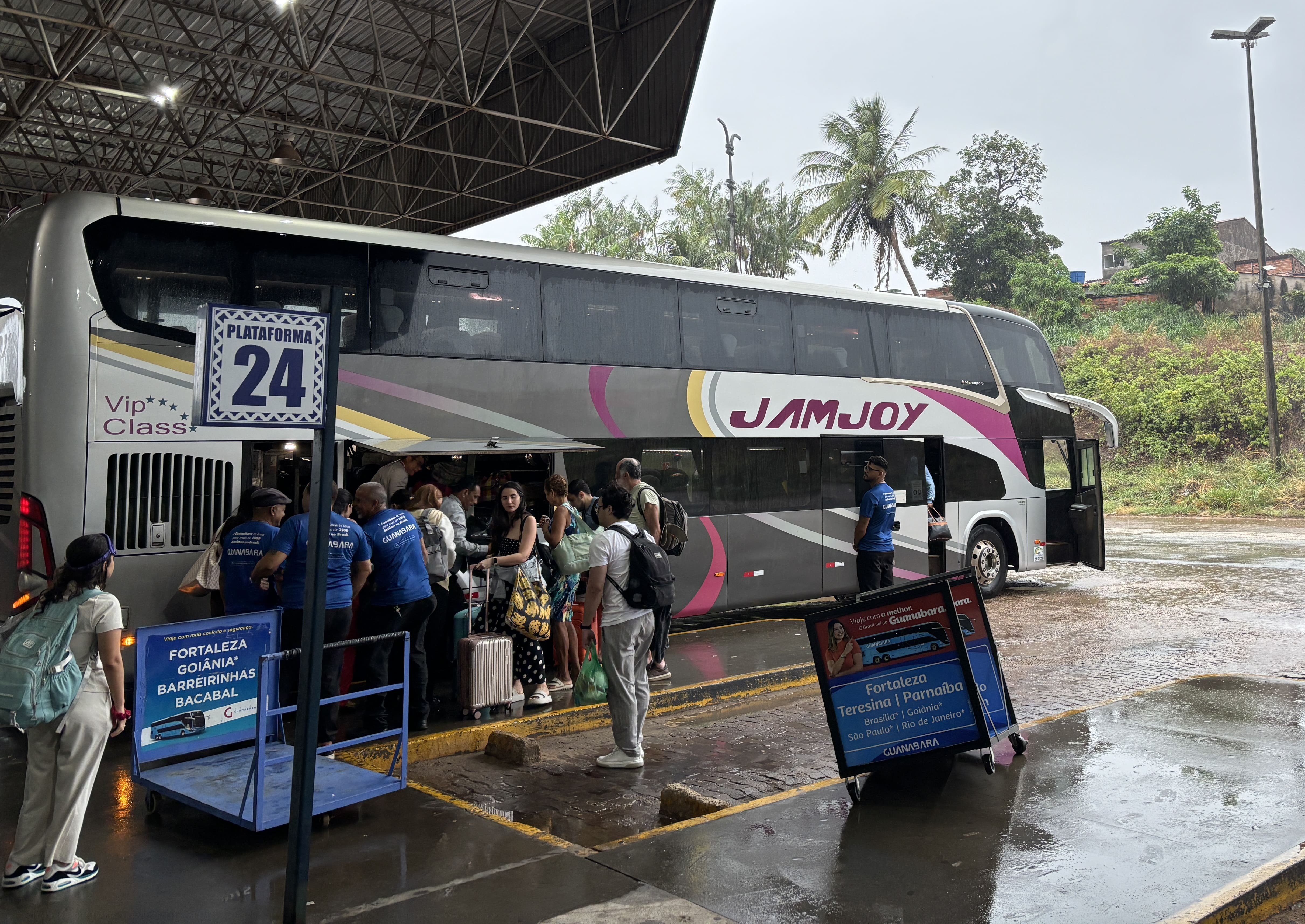
Belém bus station. Not somewhere you'd want to, or need to spend time: showing up 15-30 minutes before departure is perfectly fine.
My leito ticket, including seat reservation, cost R$270, or just over $50 USD. At the terminal you trade your printed reservation confirmation for an actual ticket, which grants you access to the platforms. Look for the booth(s) associated with your bus operator. I got to the bus station only 15 minutes before departure, which was plenty of time: I was among the last to board, but still seated and settled in more than 10 minutes before departure.
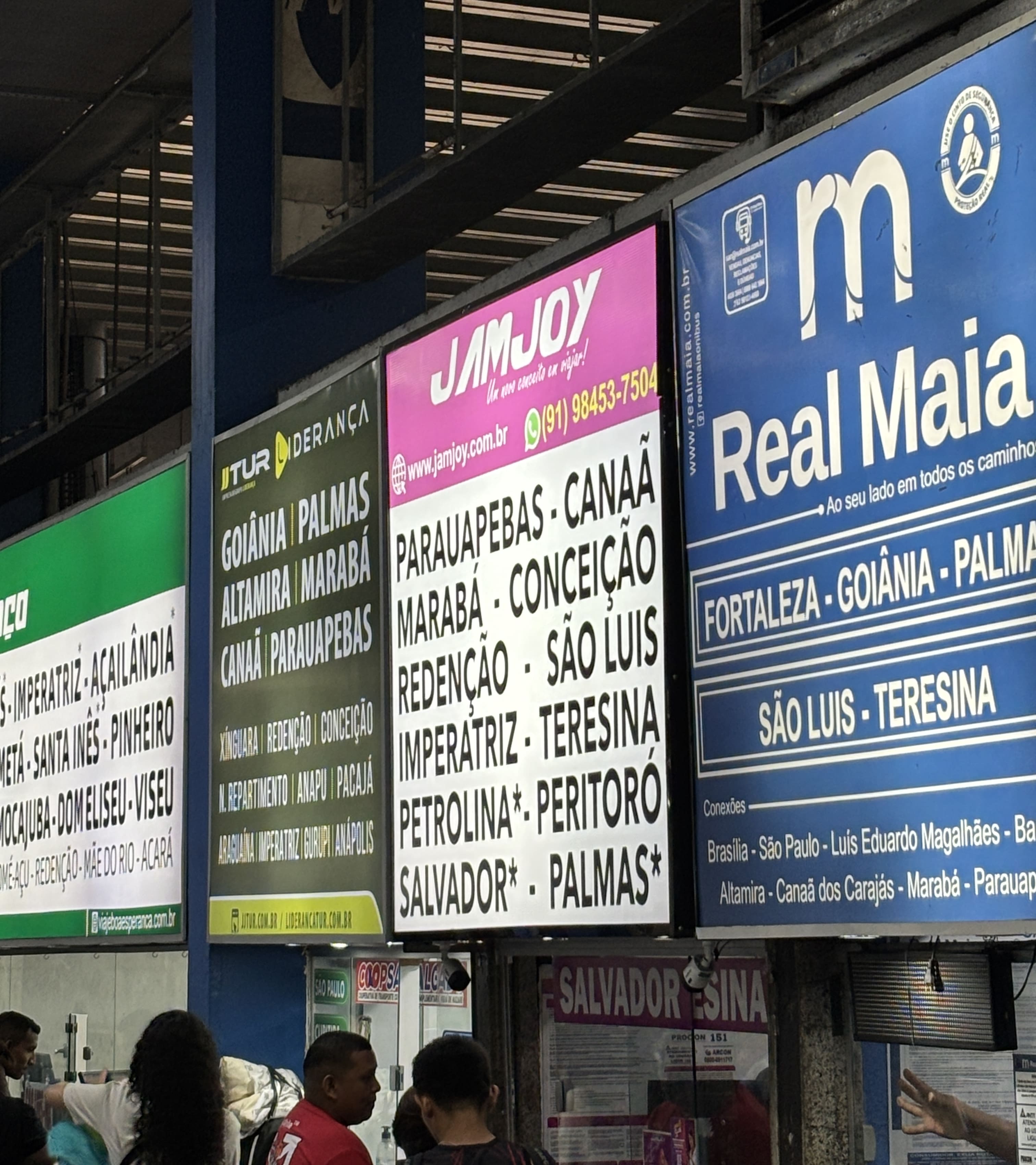
Head to a service window, demarcated by overhead signs, to trade your printed ticket for the ticket that will let you board.
Any suitcases will go in the baggage compartment, which you will not be able to access. You hand your bag(s) to the driver or assistant and receive a slip of paper in return, with a number corresponding to a sticker placed on your bag: you will need this slip to claim your baggage on arrival.
Seat and Cabin
On my bus, semi-leito occupied the entire upper level while leito occupied the lower level, along with the washroom and driver’s compartment. There were only nine leito seats, and we were cocooned in a well-air-conditioned cabin with a closing door separating it from the washroom and stairwell.
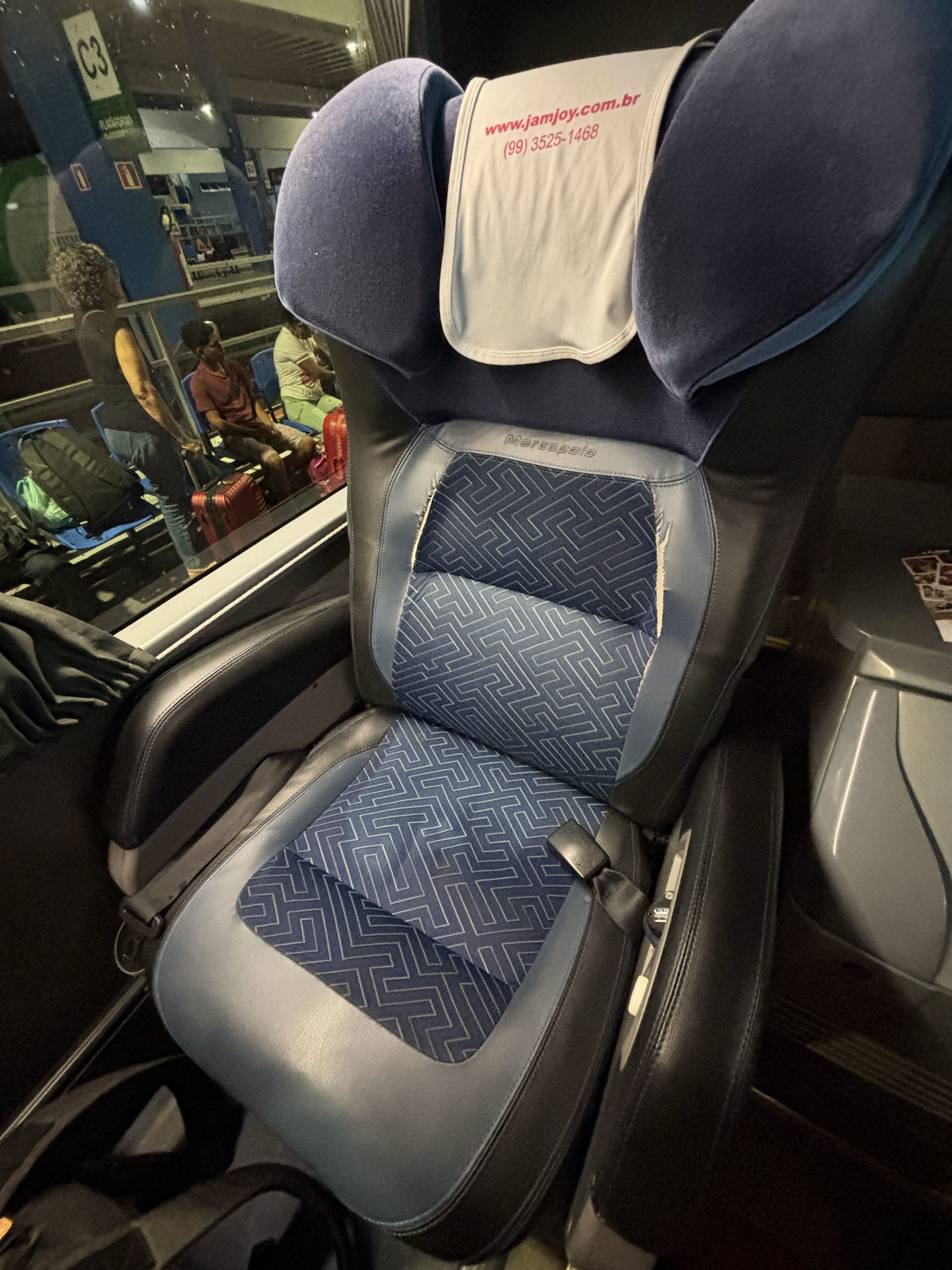
The seat was well-padded, and more comfortable as a seat than a bed.
Each seat had an individual air vent and reading light, as well as two USB-A charge points. There was a small plastic garbage bag waiting at my seat. There were no curtains dividing seats: if you’re travelling solo like I was, try your darnedest to get a single seat, otherwise you will be sleeping in full view of your (very close) neighbour.
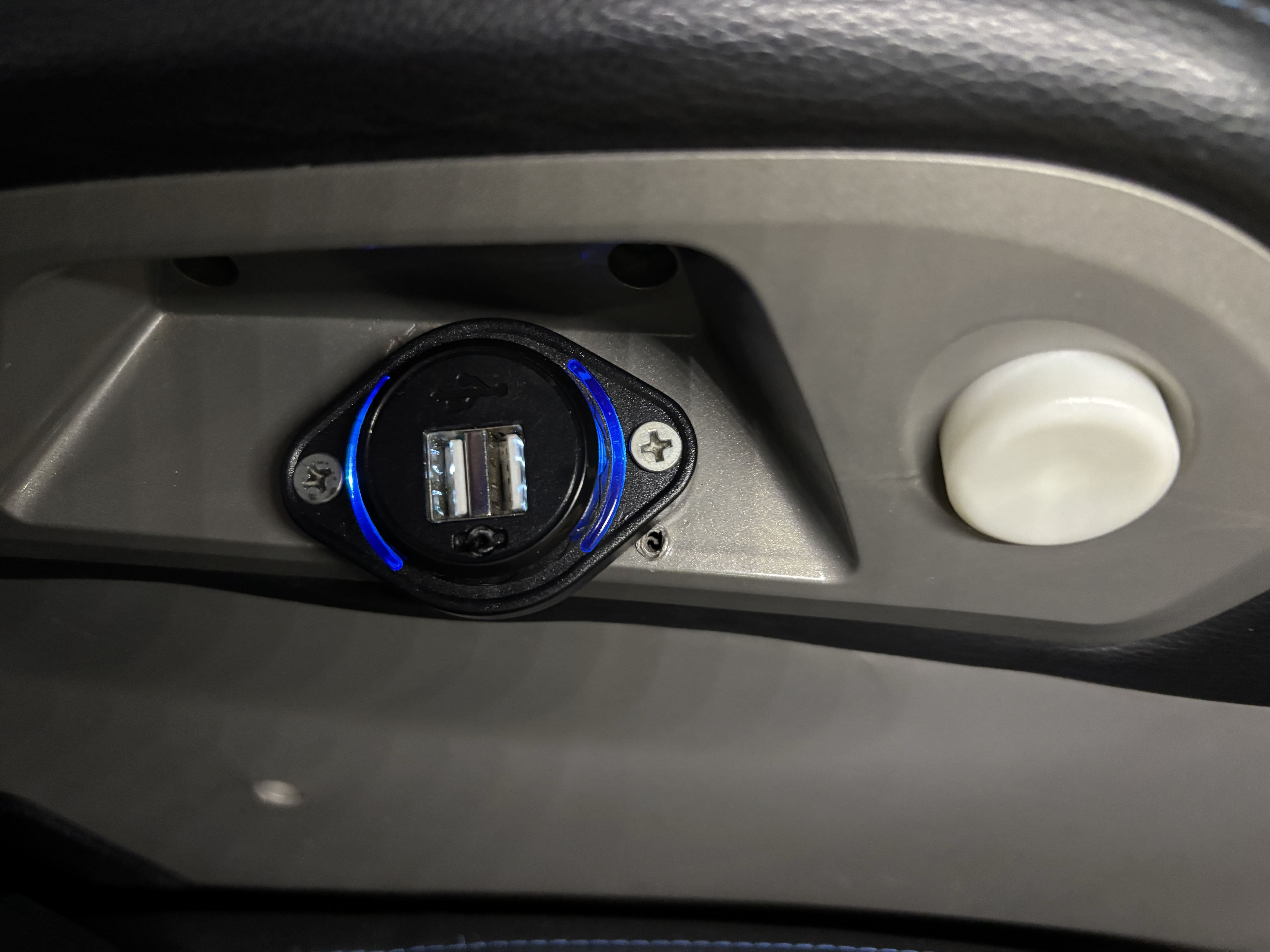
A pair of USB-A charing points are found under the armrest, next to the white recline button.
The seat itself was exceptionally well-padded, which was a good thing as no pillows or blankets were offered: like a good hitchhiker of the galaxy, I used a towel as a blanket instead and didn’t miss the pillow thanks to the supportive headrest.
Unfortunately, pillows and blankets weren’t the only thing Jamjoy promised but failed to deliver: WiFi was also not available at any point of the journey. I have a Brazilian eSIM, but cell service on rural stretches of road is unreliable and I had no service for most of the journey.
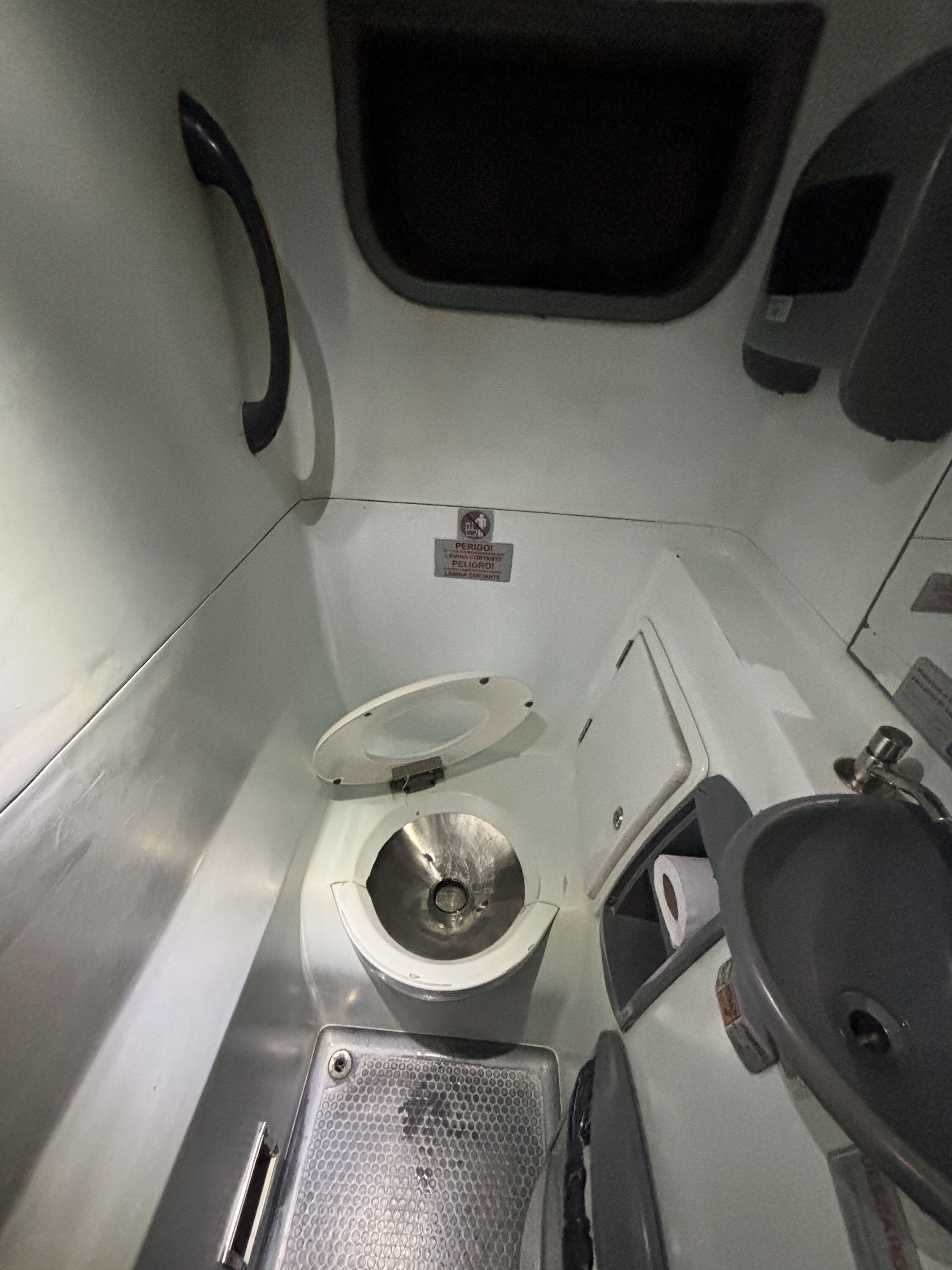
It serves its purpose.
There was one washroom aboard, with toilet paper provided but no soap (neither of these are guaranteed, and it’s best to bring your own toilet paper and hand sanitiser/wipes). This got rather…characterful as the journey progressed, and it’s best not to look down.
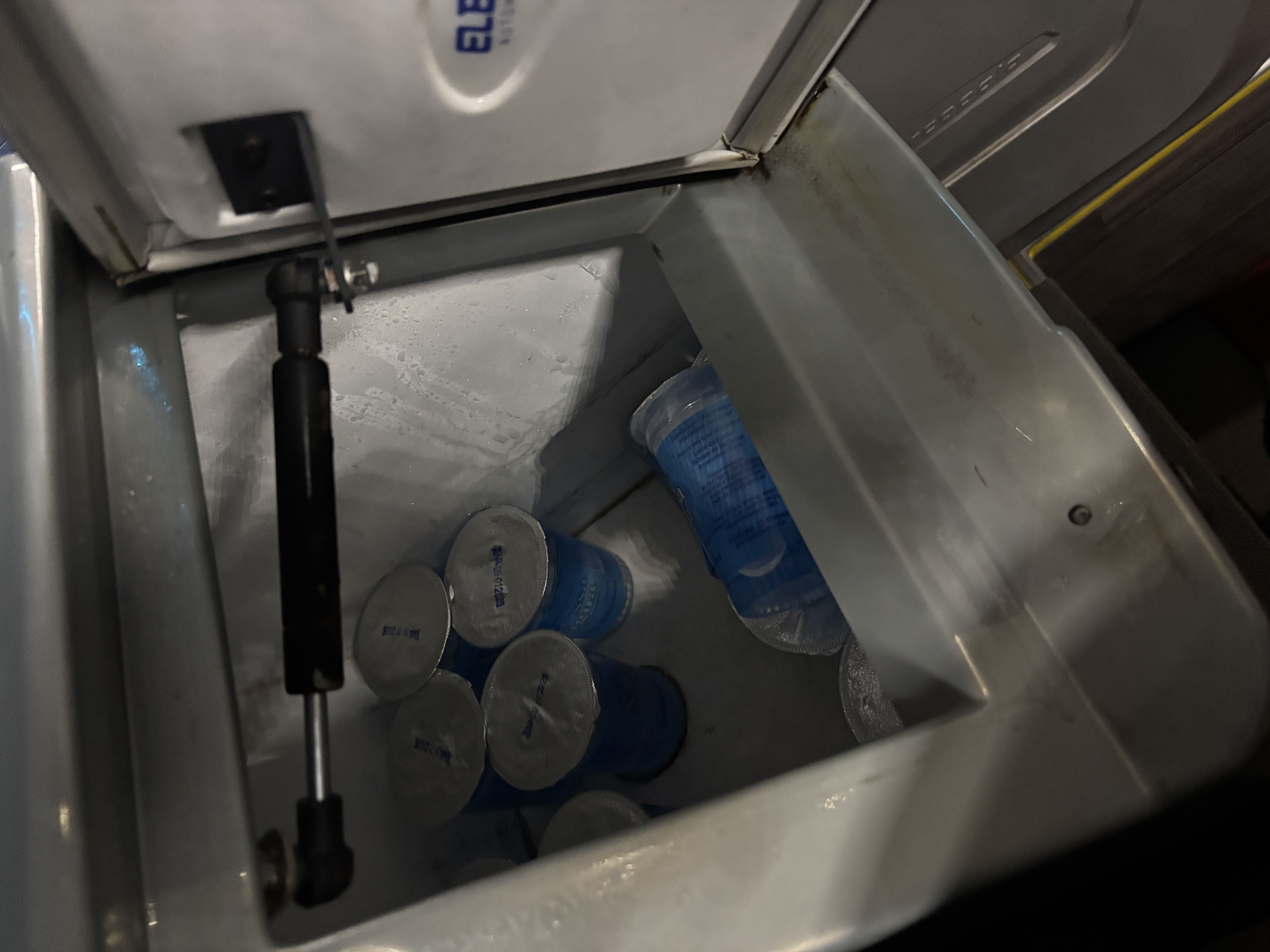
Free water is available for leito passengers from a cooler at the back of the cabin.
At the back of the leito cabin, conveniently right next to my seat, was a cooler with complimentary cups of water. You are also welcome to place your own food and drink items in there.
The Journey
There were many vendors selling food, drinks, and other travel necessities at Belém bus station. Vendors will also be found at intermediate stations along the way, and will sometimes even climb aboard the bus to sell directly at your seat.
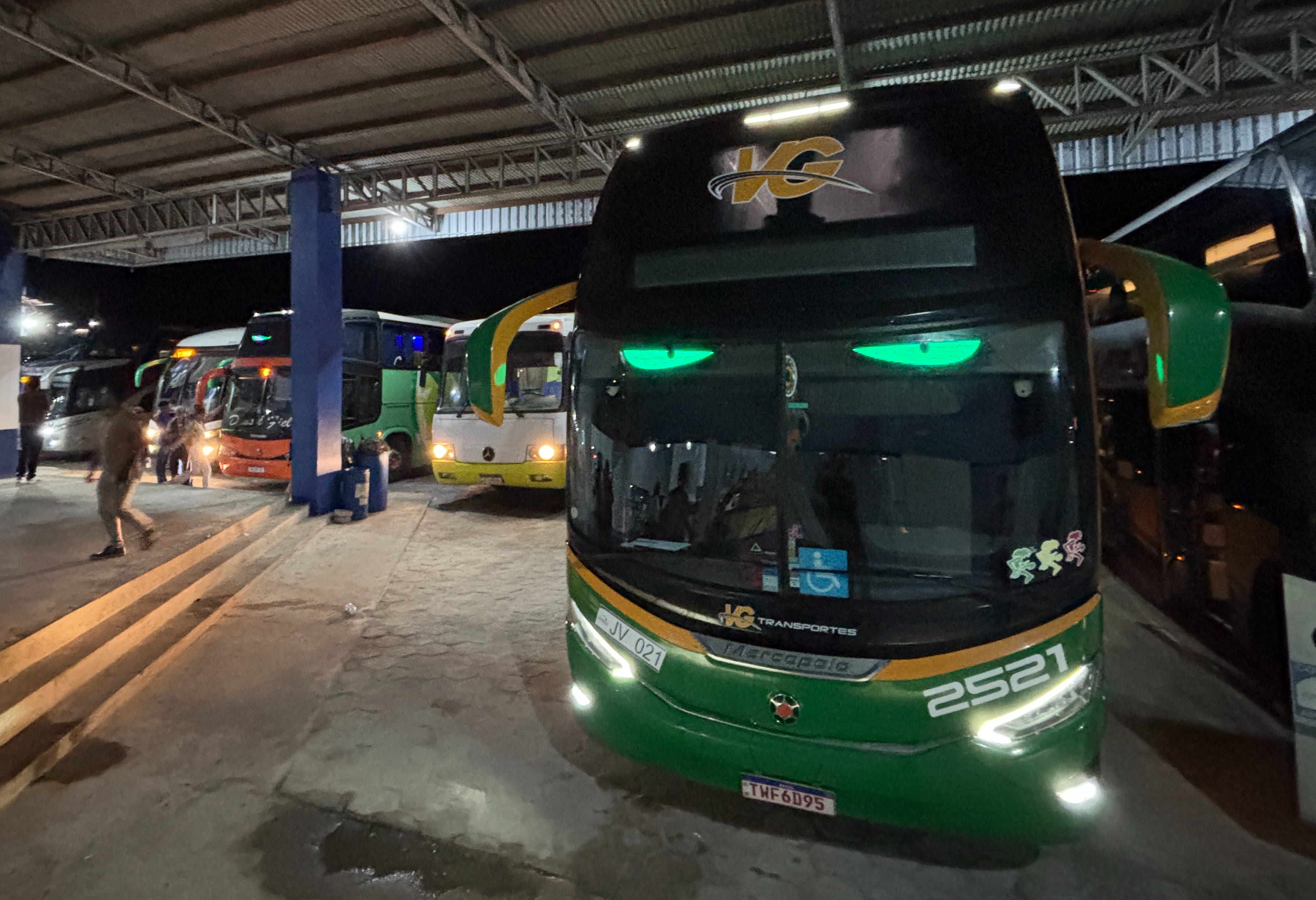
Eyes on the road.
We left ten minutes late, at 6:40 p.m. Note that Jamjoy’s website shows two busses, one leaving at 6:30 and the other at 6:31: these are the same bus, just for semi-leito and leito ticket sales. Before departure the driver provided a briefing in Portuguese.
You can bring food with you, but if you don't there will be no shortage of opportunities to eat and drink along the way.
Our first stop, Ananindeua, came roughly 25 minutes into the trip. Here, the ninth and final leito passenger boarded to complete our sold-out cabin.
We made two comfort stops en route. First, we stopped at 9 p.m. at a roadside restaurant, Restaurante Padre Cicero, for dinner. Drivers get a small kickback to stop at certain restaurants and prices were higher than supermarkets, but not outrageously so: a packet of cookies was R$10, bottle of water R$6, and hot food was available buffet-style by the kilogram. I had brought food with me on board so only got a snack here. This was a popular stop, and I saw one bus heading all the way from Belém to Goiania—a mammoth 29-hour journey, not including stops.
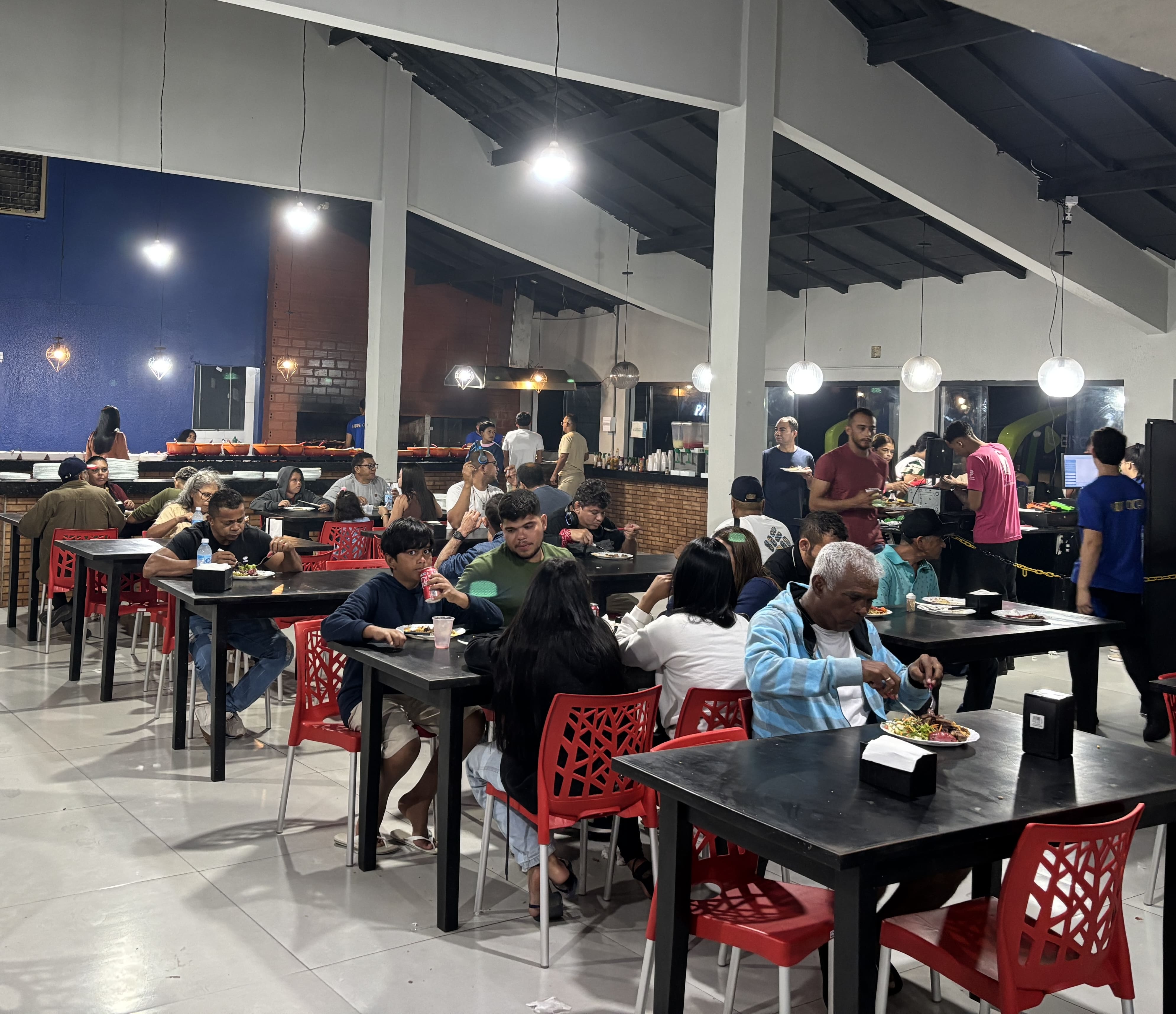
Our first extended stop came just over two hours into the trip, for dinner.
Our second stop came just after 7 a.m. at another roadside restaurant, Churrascaria Santo Antônio. I, again, did not eat (having brought some bananas for breakfast), but took advantage of the free restrooms to brush my teeth and change out of my pajamas. Here’s a top tip: these stops are timed to end and start your day. Use them to brush your teeth and change, rather than bouncing around in the cramped and dirty washroom on board.
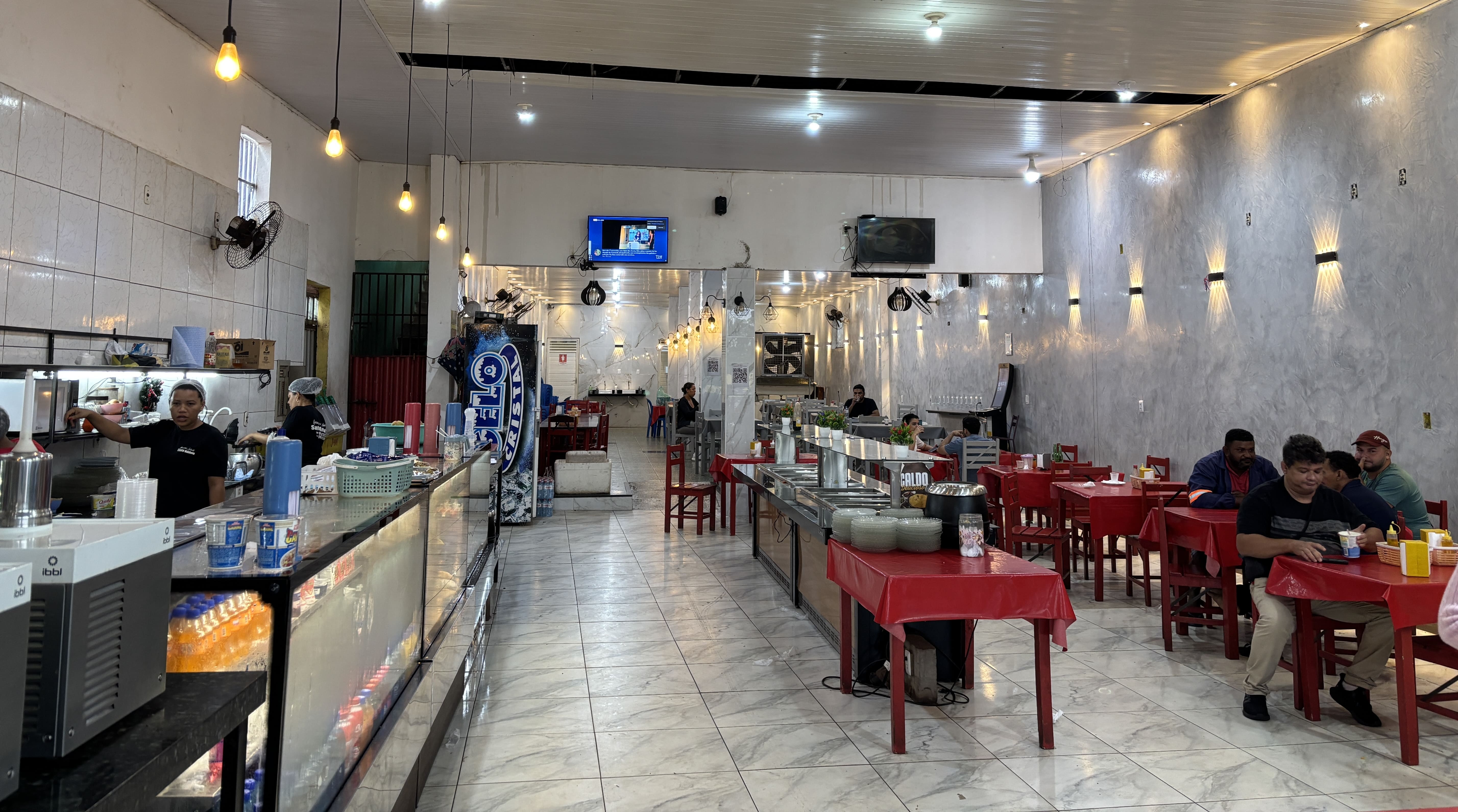
Our second stop, 12 hours in, was timed for breakfast.
Drivers honk when they are ready to leave, after 20-30 minutes usually. They do a headcount before leaving, so you won’t be left behind.
Sleep
This was my big question going in: would I arrive rested, or regretful? I cannot sleep sitting upright, no matter how tired I am, but managed a somewhat-restless seven-hours of sleep on this trip.
The bed, despite being sold as “leito”, reclined to only 140 degrees or so: close to flat, but very noticeably not fully so. It is comparable to the “lounge” setting on long-haul business class seats: your back and legs will be partially supported, but most of your weight will still be placed on your backside. This shape made it impossible to sleep any way except on my back. Legroom was also not quite enough for me at 1.91 metres tall, though it wasn’t bad.
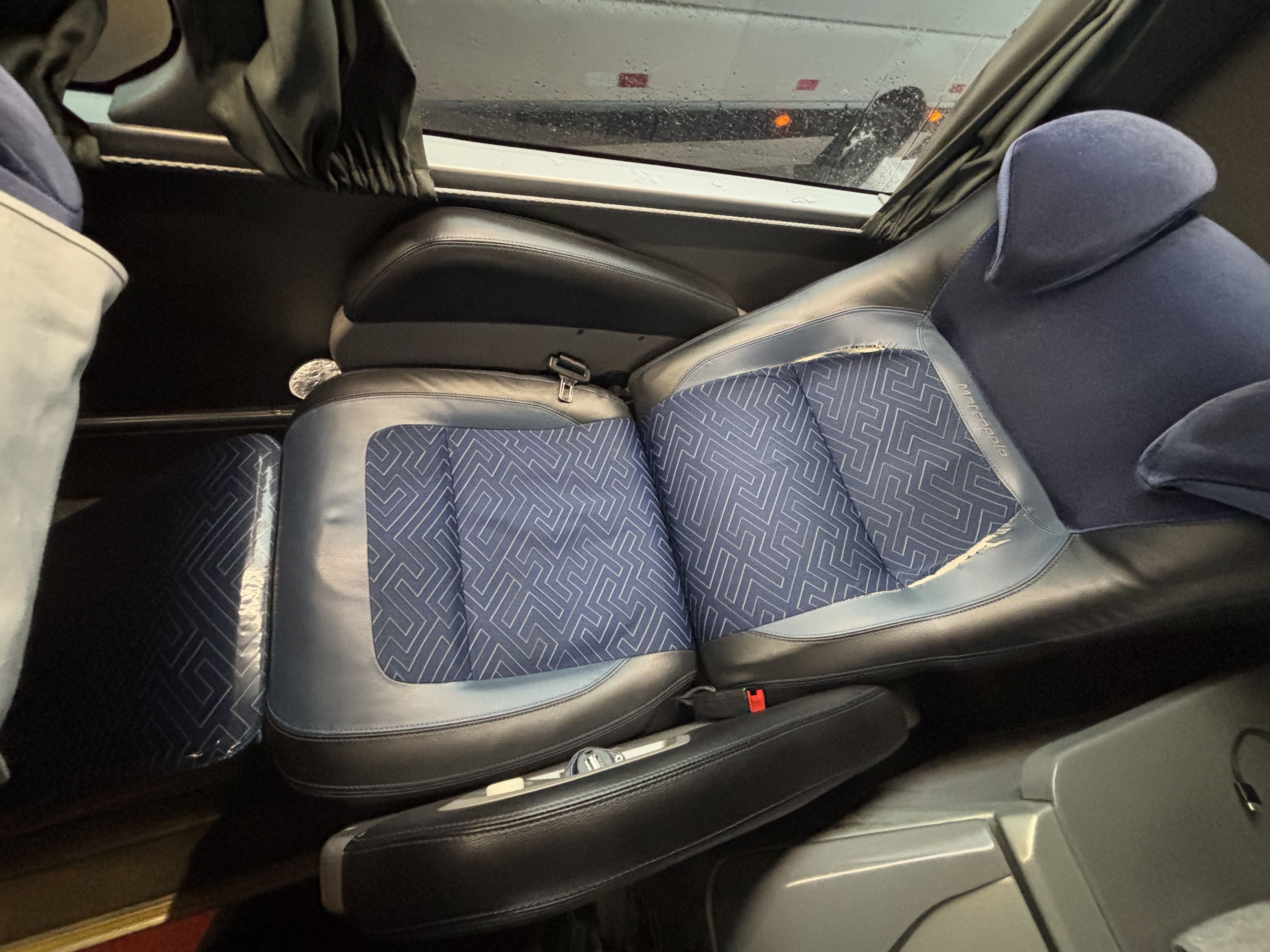
The seat in "bed" mode.
South America is not known for quiet and respectful transit, so I was pleasantly surprised at the lack of music or AI-generated TikTok drivel filling the cabin throughout the night. The air conditioning unit was loud, but this turned out to be a positive: it was a constant source of background noise, drowning out the undulations of the road and I actually missed it when it periodically turned off.
I got lucky with the lack of music and noise on this bus...plan to not be as fortunate, and bring ear plugs and/or noise-cancelling headphones.
There was an infrared security camera monitoring the cabin…whether it worked or not I don’t know, but its presence was reassuring. I took my valuables with me when I got off the bus at comfort stops, but wasn’t worried leaving them next to me overnight.
Would I Do It Again?
Absolutely. We arrived early at 9:22 a.m. and I felt surprisingly well-rested. Many bus stations across Brazil, São Luís included, offer showers either for free or for the equivalent of a few dollars, meaning you get both principal benefits of a hotel room when travelling by bus: sleep and a shower.
We arrived early into a rainy São Luís. The driver reversed in so passengers wouldn't get drenched waiting for their bags.
The value is unbeatable. The cheapest flight on this route is offered by Azul for around R$450, booked a few months in advance. Jamjoy will transport you for R$270, and unlike the flight (which rises exponentially in cost closer to departure), this price does not change. Add the savings of a mid-range hotel at R$300, and you’re saving the equivalent of nearly $100 USD—which goes a heckuva long way in Brazil.
Top Tips
- Book Early: if you know your travel dates, there is no incentive to wait. While seats are often available even on the day of departure, the most desirable (single leito) seats can and do sell out.
- Pack smart: bring everything you will need in a small day bag. Something to use as a blanket and/or pillow, snacks, charger, valuables, headphones.
- Download content: don’t expect WiFi or cell service.
- Stretch your legs: 12+ hours is a very long time to be sitting down. While you shouldn’t wander too far, don’t worry about the bus darting off the second you step off: when you see everyone else getting off at a comfort stop, it’s safe to assume you can as well.
- Arrive refreshed: take advantage of the rest stops to brush your teeth and change into fresh pajamas/clothes. It helps, a lot.