Peñas Blancas: Crossing by Foot from Costa Rica to Nicaragua
Peñas Blancas is a popular border crossing point for locals and foreigners alike, being far more convenient for tourist destinations like San Juan del Sur and Ometepe than flying into Managua. While land crossings in Central America can be intimidating at first, the entire process, including public transit to and from the border, was safe and straightforward.
Introduction
There are two bus companies, Nica Bus and Tica Bus, that run direct services between San José, Costa Rica and Managua, Nicaragua. At $30/$33 US respectively, these direct options are much cheaper than flying (~$200), but still more than double the price of using local bus services for not much more comfort. You’ll also have to wait for the slowest person on your bus to clear immigration, which eats away at the time savings of going direct, and you have less flexibility on where to get on and off. Here’s how I made the journey solo instead:
Getting from San José to Peñas Blancas
Busses are operated by Transportes Deldu and leave from the Gran Terminal del Caribe. While it is possible to show up and buy a ticket before departure, getting it the day before is strongly advised otherwise you may be standing. Fare ₡5,520, including assigned seat and one suitcase: if you have more, or large bags, you will be asked to pay extra upon boarding. Tickets can also be booked online for an added fee.
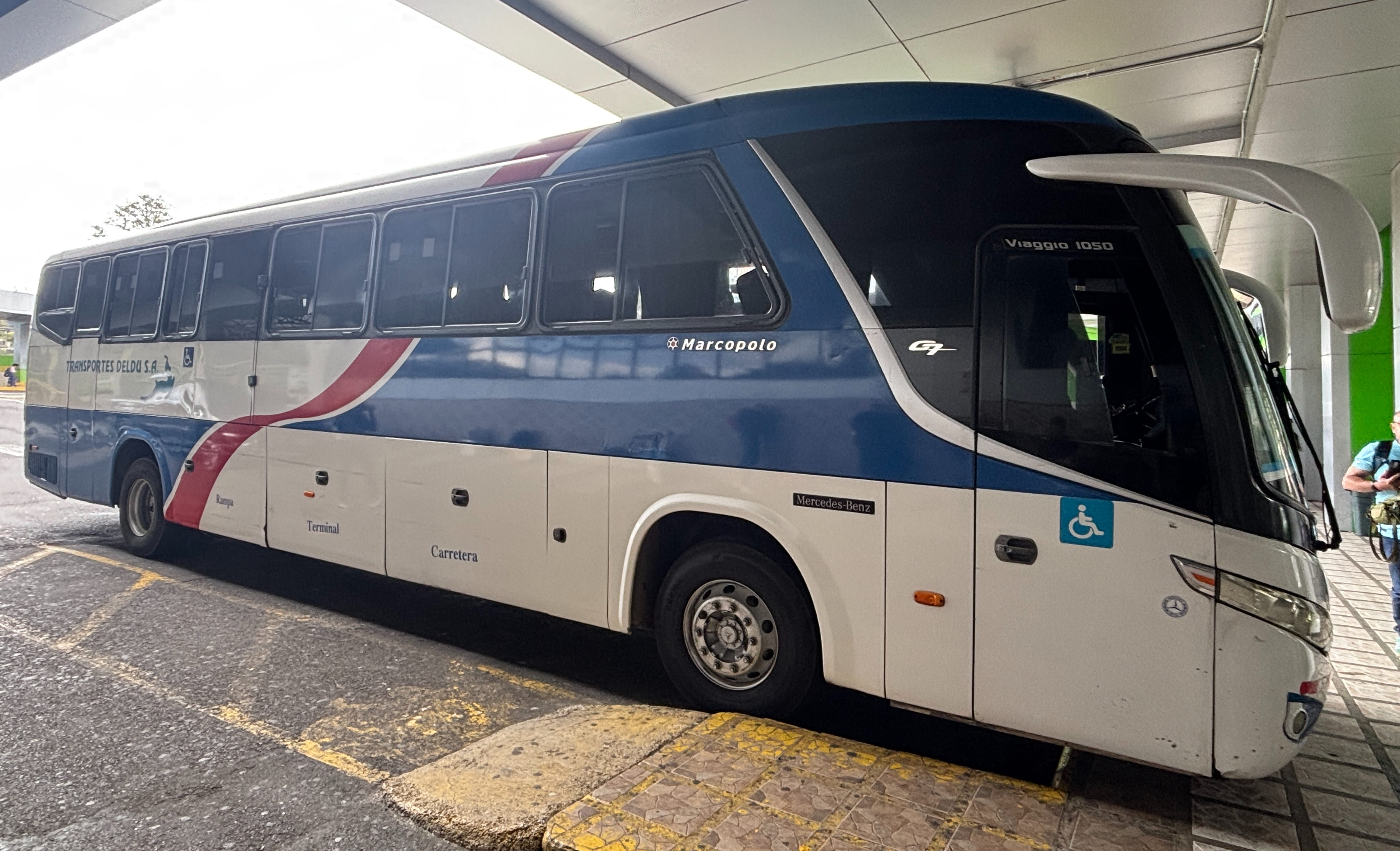
It looks nice enough from the outside. Looks can be deceiving.
My bus left more or less on time at 8:48 a.m. for the 6.5-hour journey to Peñas Blancas. At the three-hour mark the bus stopped for a 20-minute lunch break at Restaurante El Gran Parqueo. With no washroom on board, this was also the only bathroom break. Speaking of things not on board: no air conditioning or air vents, just windows (it got very hot), and the reading lights didn’t work. Vendors also climb aboard or pass by the windows at intermediate stops, including a currency trader who got on board near La Cruz and offered competitive rates for exchanging colóns to córdobas (8% mark-up). There are newer, double-decker busses with air conditioning operated by the same company on this route, but we got stuck with an old single-deck model.
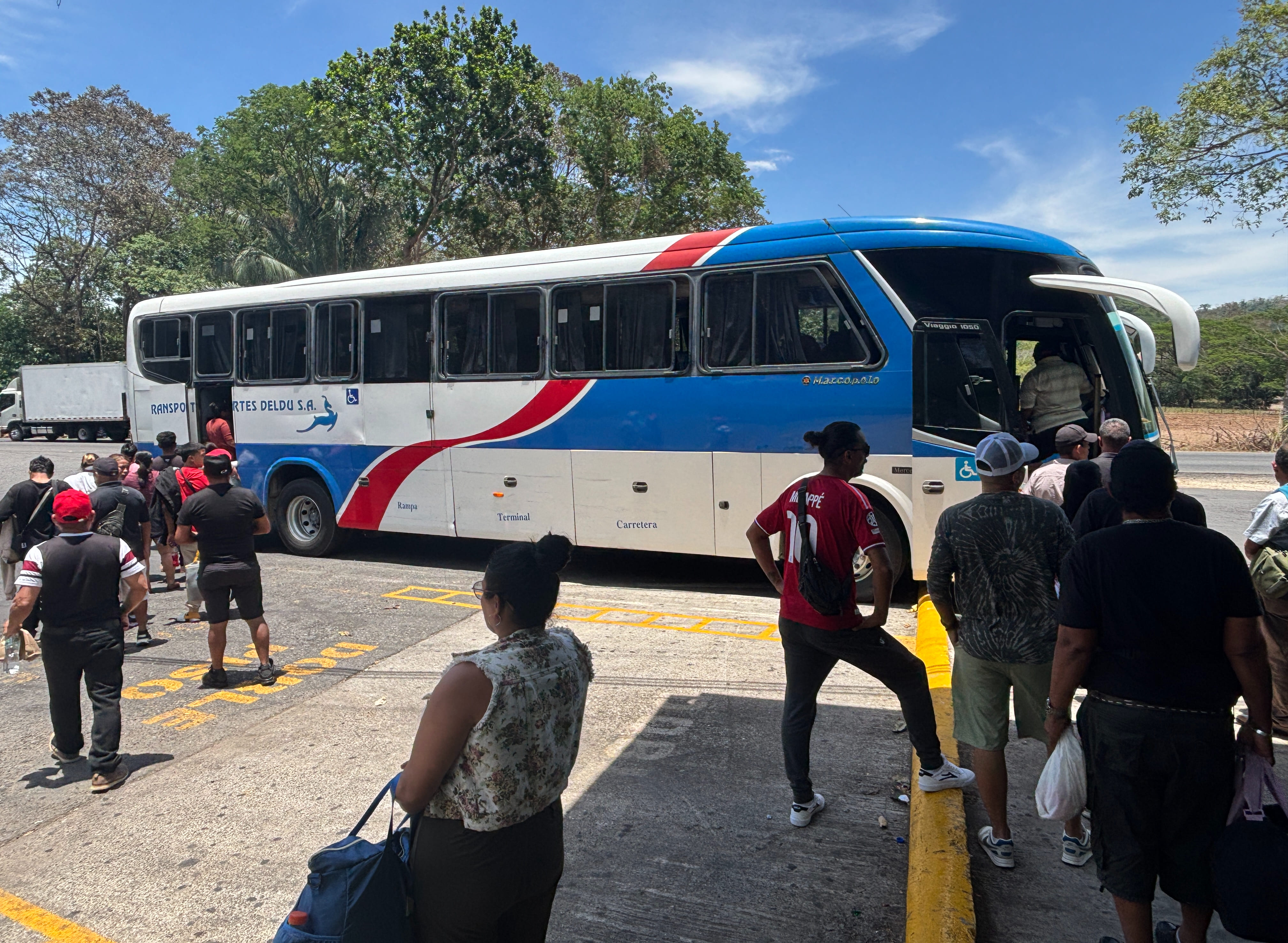
Passengers waiting to climb back on board following a 20-minute rest stop. The restaurant makes an announcement when each bus is ready to depart.
In Peñas Blancas the bus stops on the opposite side of the highway from Costa Rican immigration. To deter theft the driver waits until all passengers have disembarked before opening the luggage compartments, then it’s a free-for-all: pay attention to any bags wandering off, and fight your way to the front when yours becomes visible.
Exiting Costa Rica
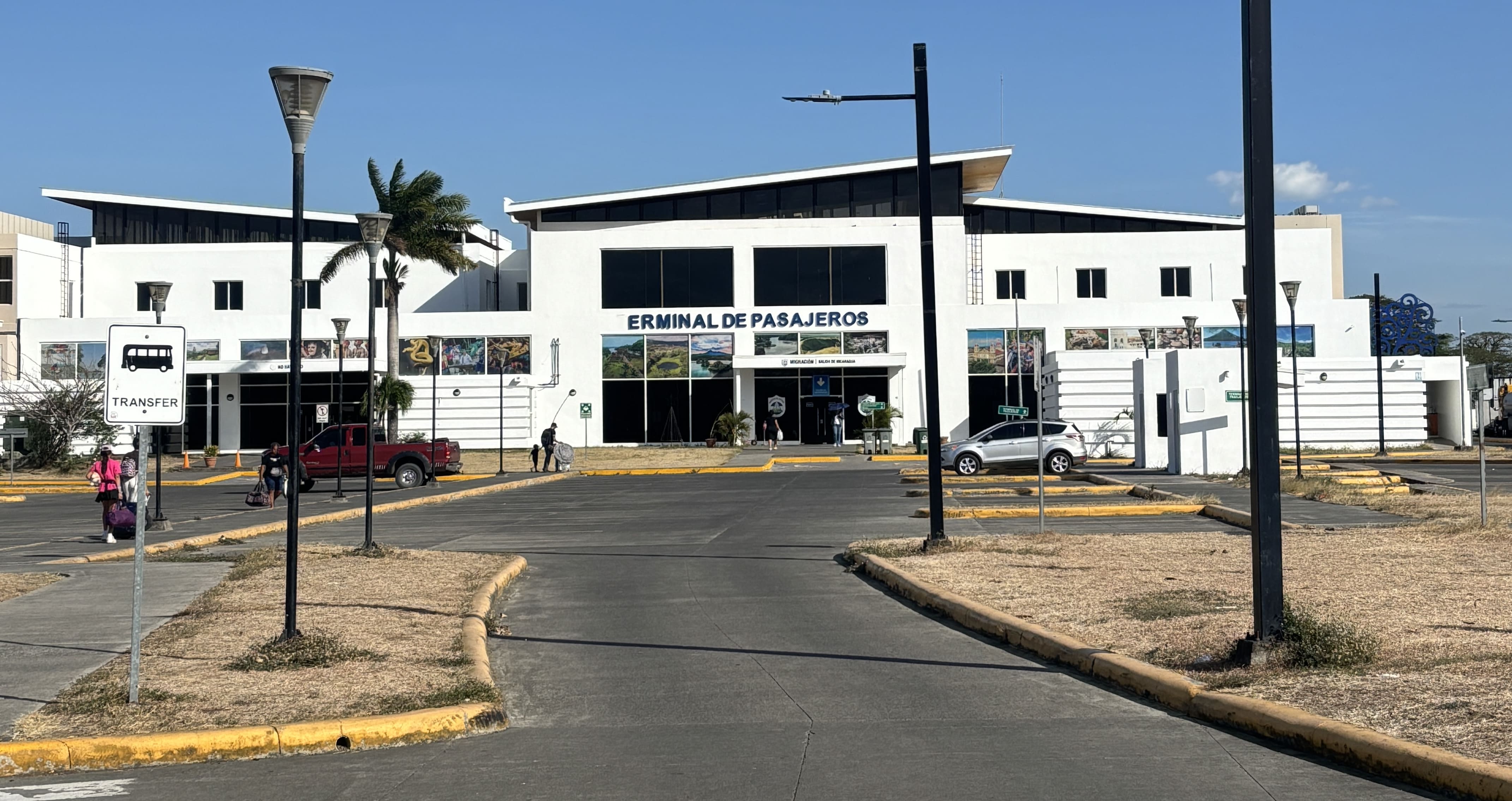
From the bus terminal, follow the pedestrian walkway through multiple layers of barbed-wire fence until you reach the large, modern building where Costa Rican entry and exit formalities are completed. The entire crossing in both countries is poorly signed, though security guards are stationed regularly and will point you in the right direction. The Costa Rican building has free washrooms.
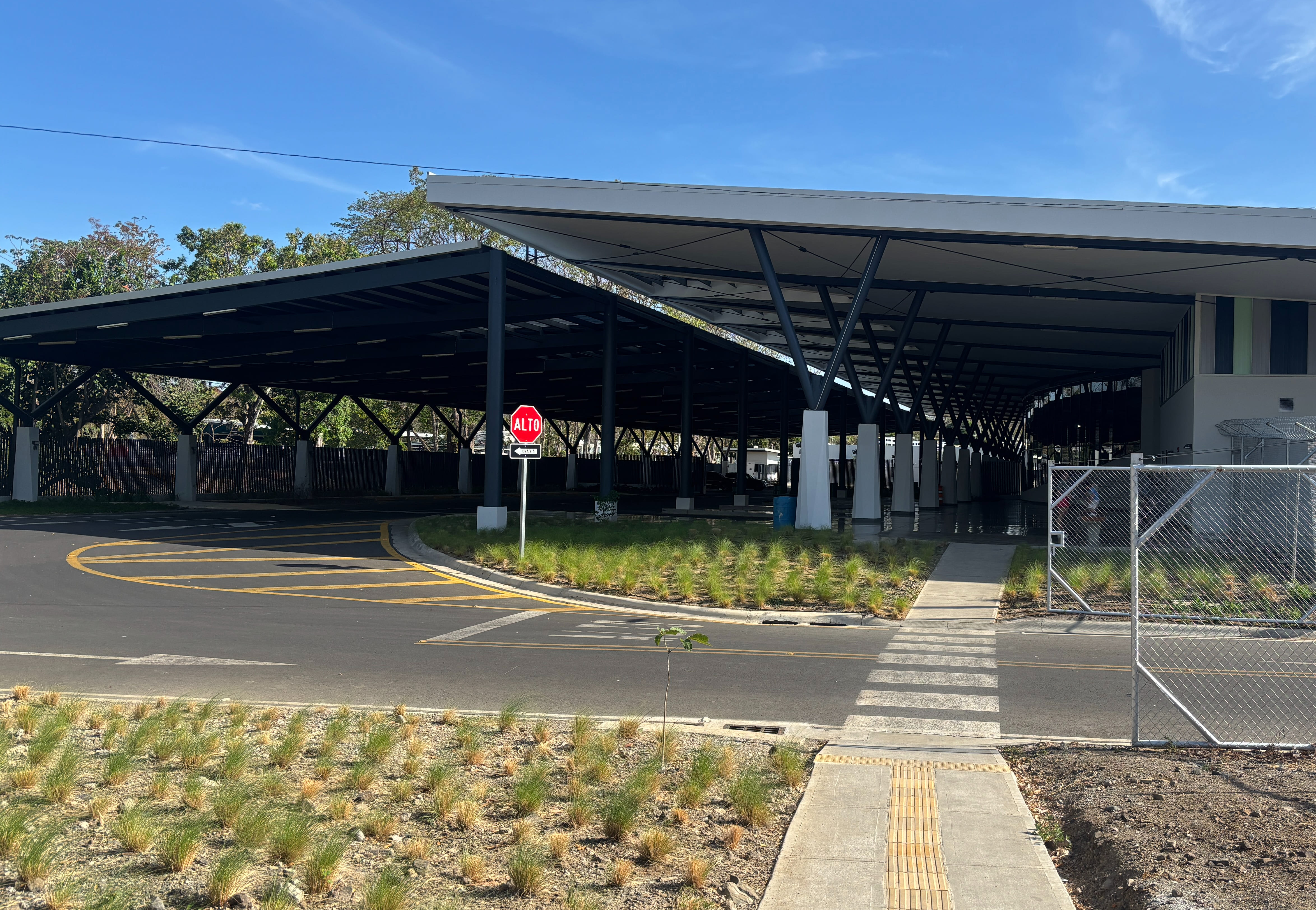
The imposing Costa Rican immigration building is hard to miss, but if you somehow manage it you'll be pointed in the right direction by security.
You are responsible for paying the land exit cash grab fee: it is $8 US paid online in advance through Banco BCR, or $10 paid in cash at the border. Even though you can reach immigration by simply bypassing this counter, the exit tax is tied to passport numbers and border guards will turn you back if no payment appears when they scan your document, as happened to another traveller on my bus.
Otherwise the Costa Rican side was quick and easy: there was no line and five open counters, and I was through in less than a minute.
Entering Nicaragua
There is a maze of sidewalks and roadways in the no man’s land between Costa Rica and Nicaragua: just keep heading in generally the right direction, and the walk between the two immigration buildings should take you about ten minutes with shade intermittently available. You will be asked for your passport a few times by not-very-official-looking officials: this is normal, and they’re just checking for your Costa Rican exit stamp. The first impression Nicaragua wants to give to visitors is asking for money: a man at the entrance to the immigration building stood up as I approached and said “one dollar”. This is one of three fees you’ll have to pay (cash only, USD only, exact change strongly advised in case the officials “run out” of small bills), and is essentially state-level panhandling. You do at least get receipts with printed values, so won’t be overcharged if you have exact change.
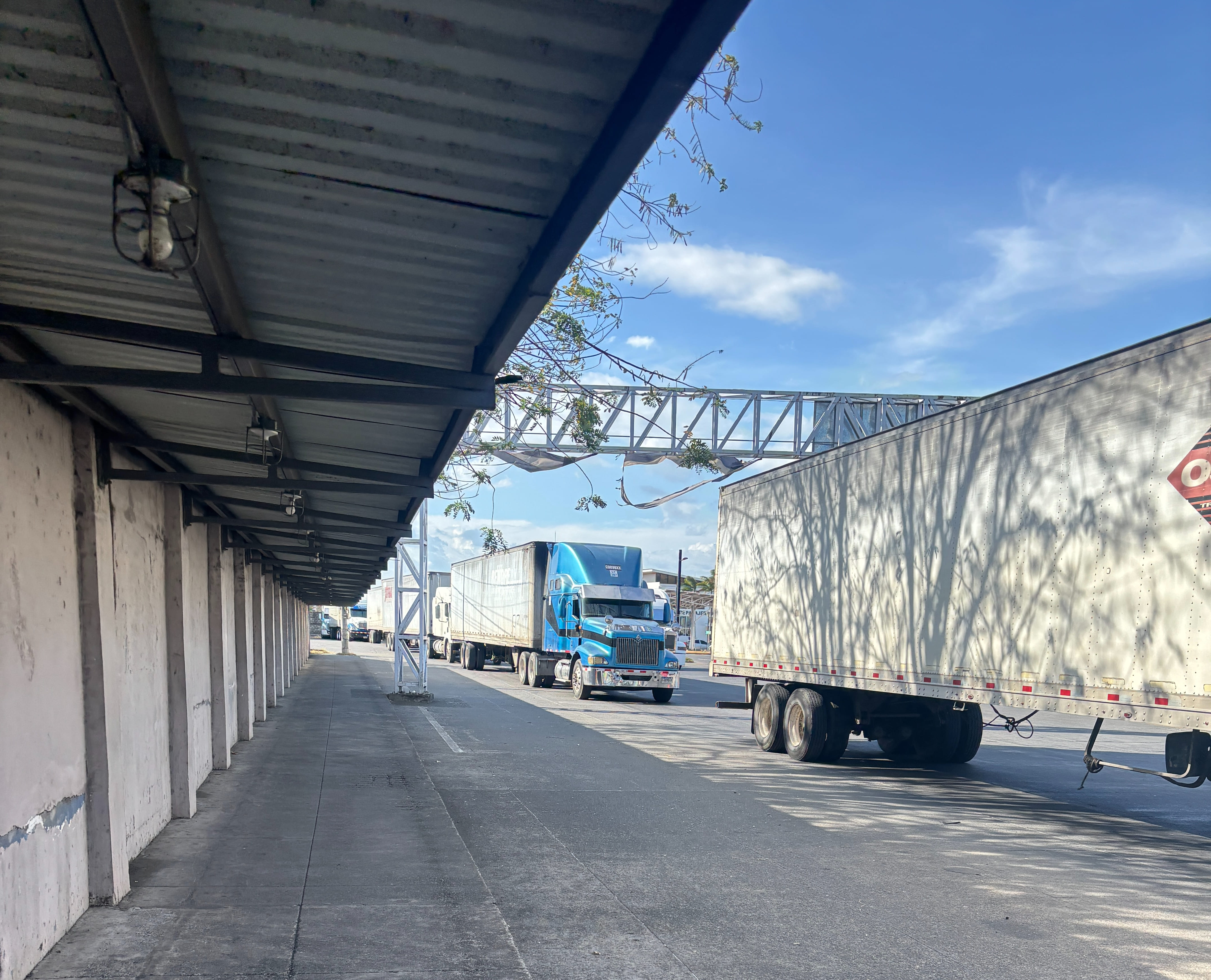
You will walk past dozens of 18-wheelers waiting to enter or leave Costa Rica, which is not a member of the Central American Customs Union.
Once you pay the one-dollar entry fee to access the building, you line up for passport control. An officer will validate your entry eligibility before continuing the cash grab: you will be asked to pay $13 US total for two separate fees, and won’t be stamped in until you pay. The border guard asked my occupation, length of stay, and for a hotel name…standard stuff, and I was through in around three minutes. Note that the Nicaraguan side is more run-down than what you will find in Costa Rica, and the building is quite hot.
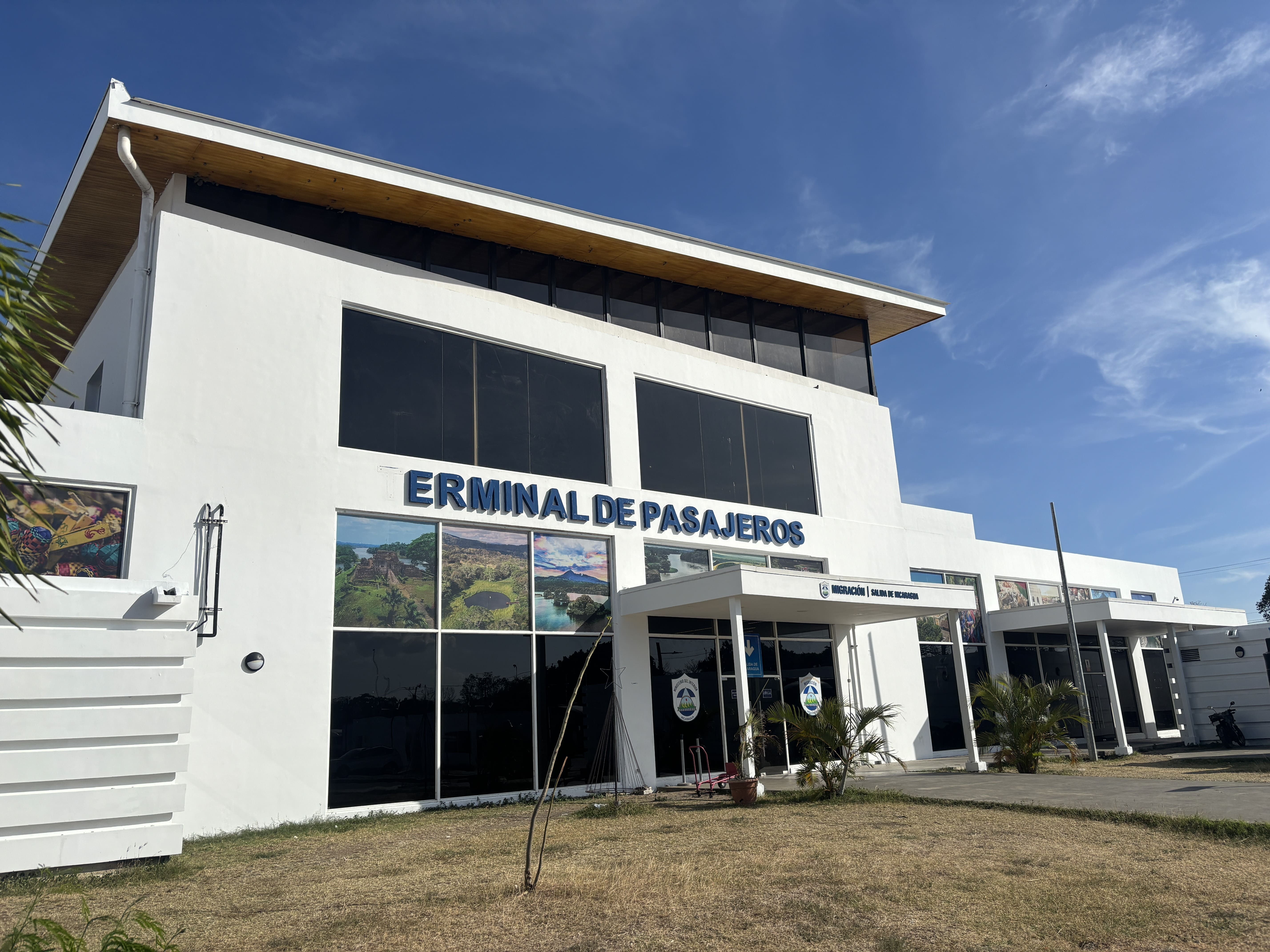
Maybe they can use some of the fees to fix their sign.
After passport control all bags are X-rayed and you are into Nicaragua. It’s about a five-minute walk past dozens of transport trucks to get to the highway, where you will find small stalls selling food and drinks (one litre of water was C$35, about $1 US).
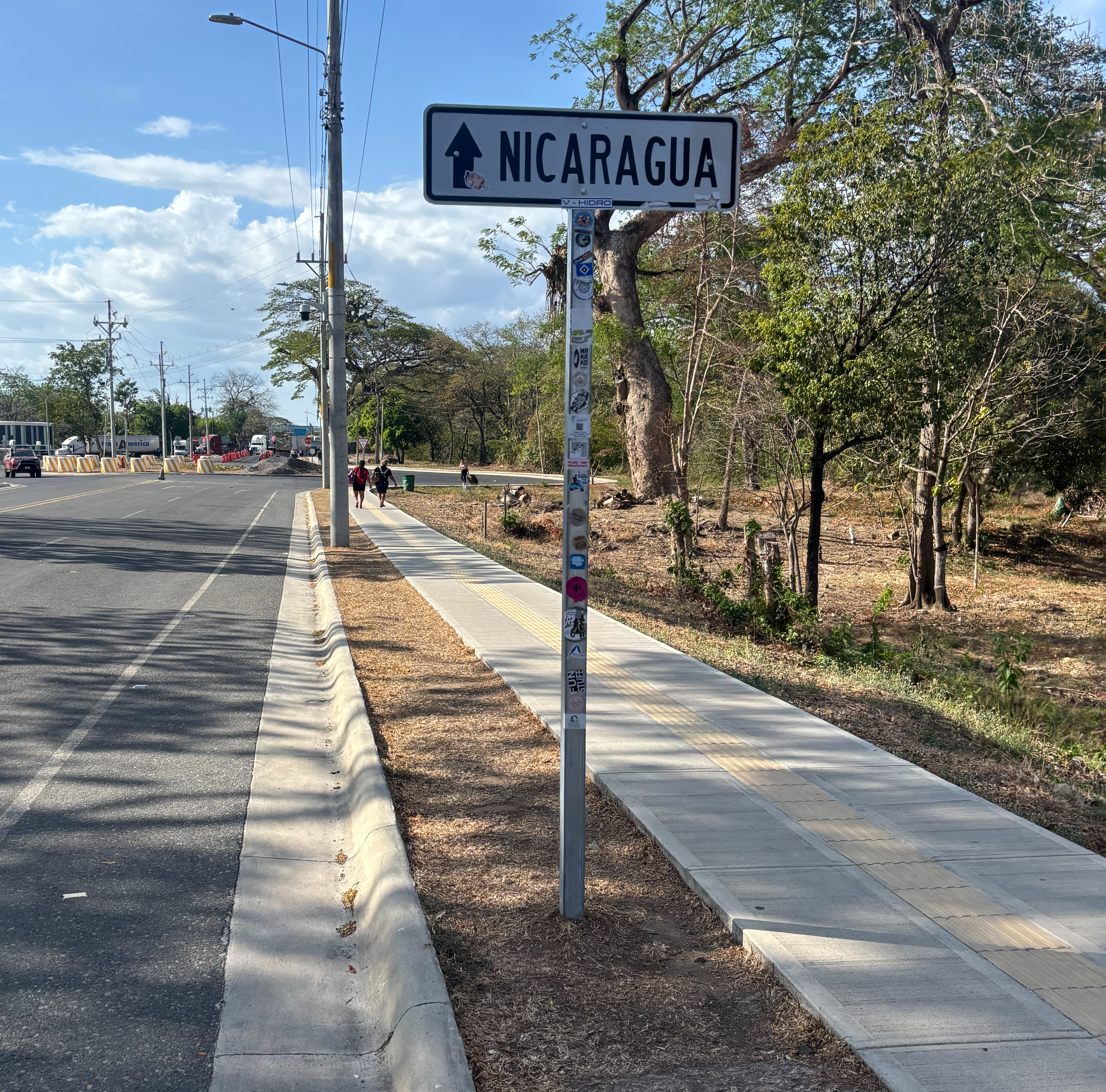
This helpful sign reassures travellers that they have not missed it and accidentally walked to Honduras.
From Peñas Blancas Onwards by School Bus
The bus terminal is roughly 250 metres down the road from the border entrance, on the left. Taxi drivers outside the border make their presence known, but aren’t any more or less pushy than at airports and border crossings elsewhere: just say no thanks and keep walking. Busses leave every half hour or better throughout the day, with frequent services to Managua and less-frequent services to other destinations. You will also find food, drink, SIM card, and souvenir vendors at the bus station, as well as pay-to-use restrooms.
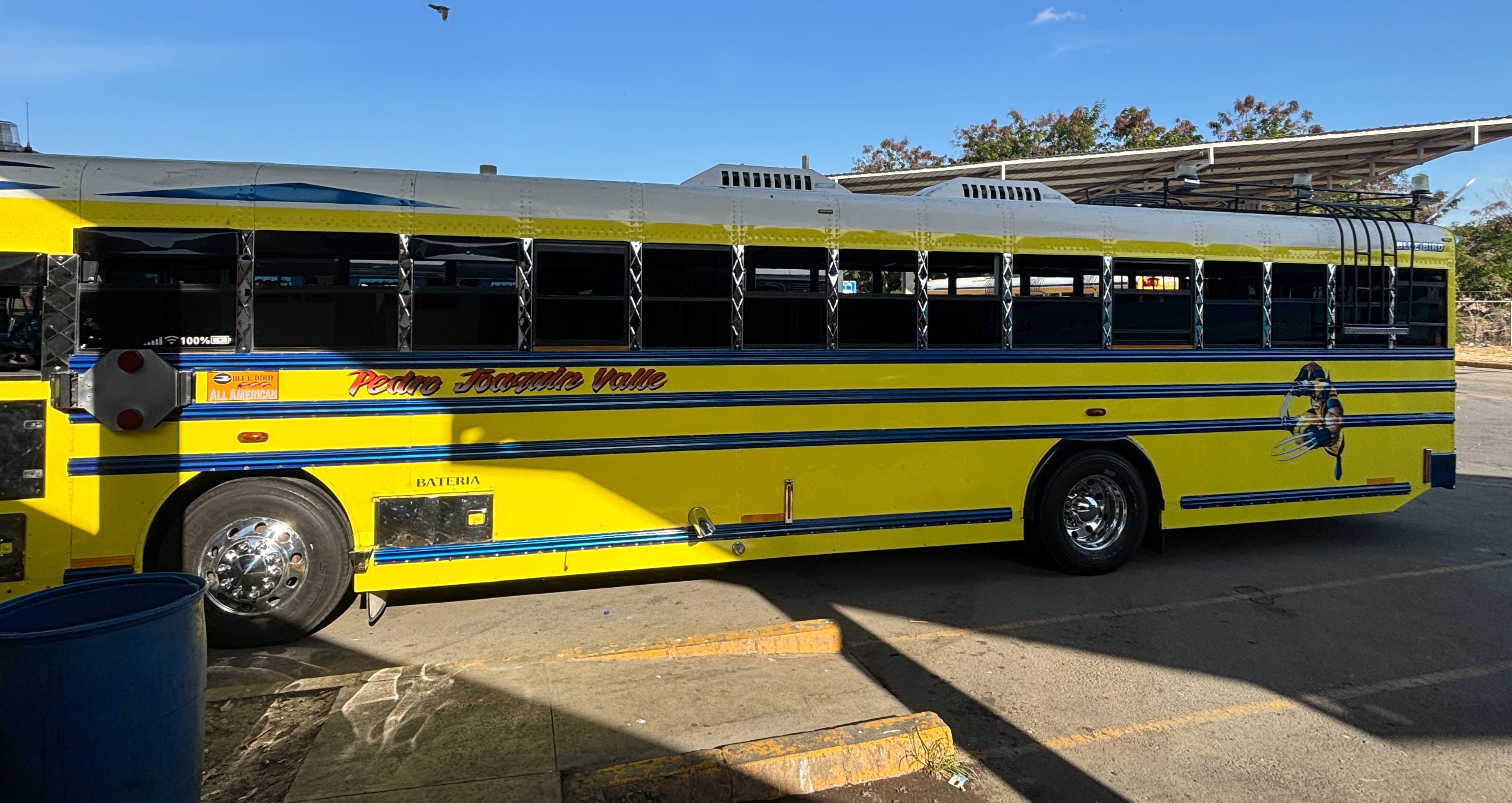
Repainted and stop signs removed, retired US school busses are shipped down to Central American countries, including Nicaragua, for use as public transit.
There was a man standing next to the busses whose sole purpose in life seemed to be shouting “Managua! Managua! Managua!” and attempting to rip off foreigners: I was quoted C$50 to get to La Virgen. I walked past him, spoke directly with the driver, and confirmed the expected fare: C$30, or $1 US. From La Virgen it’s another C$20 on a different bus to San Juan del Sur. School busses that have outlived their usefulness in the United States find new life in Central America, being used as public transport: legroom designed for fifth graders isn’t ideal, but on the plus side they were all, at one point, built to US safety standards. Overhead luggage racks large enough for a carry-on are above each seat, larger bags either go below or just…wherever.
Conclusion
All told, from the bus terminal in San José to my hotel in San Juan del Sur took just over eight hours, of which around half an hour was navigating the border at Peñas Blancas. Knowing what fees and ticket prices to expect helped me come prepared with the right change, and avoid being ripped off…either by bus drivers or border guards. It was a relatively easy, not-unpleasant journey, and one I wouldn’t hesitate to make again if my itinerary called for it.